

The ISA’s approach to equitable benefit sharing: Is there room for the common heritage of mankind?
By Kristine Gu
Published on 18 February 2026
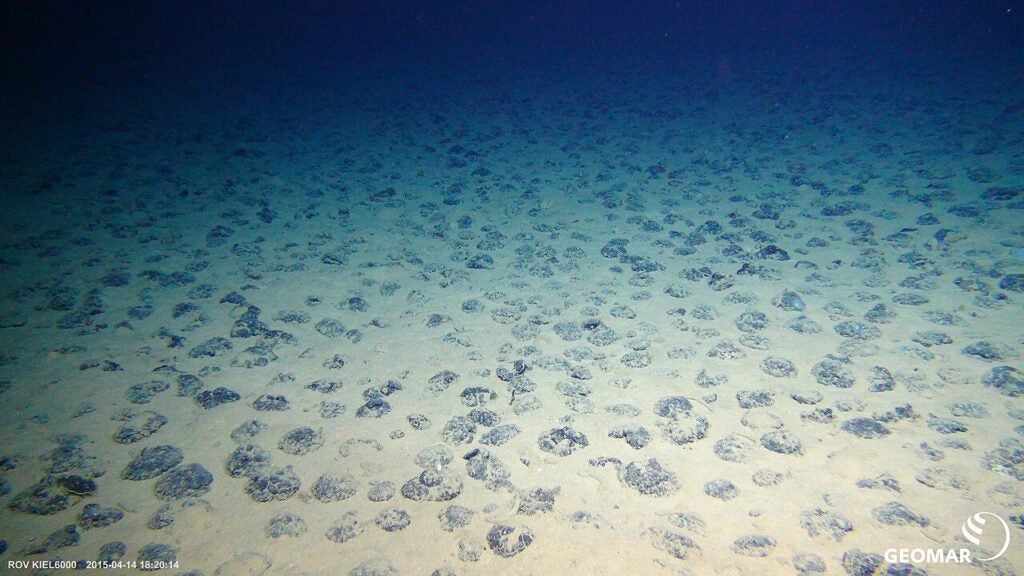
The 1982 United Nations Convention on the Law of the Sea (UNCLOS) was drafted before states were capable of earnestly commencing deep seabed mining (DSM) activities. The wealth to be unlocked by DSM came with the risk of creating interstate conflicts (para 91). Access to mineral resources in seabed areas beyond national jurisdiction, namely what was to become the Area under Article 1(1) of UNCLOS, could not go unfettered. The common heritage of humankind principle, championed by scholars like Elisabeth Mann Borgese and famously proposed in 1967 by Maltese Ambassador Pardo to the United Nations (UN) General Assembly, was adopted to address these realities.
Established under Part XI of UNCLOS and the 1994 Part XI Implementing Agreement (1994 Agreement), the International Seabed Authority (ISA) is charged with upholding the common heritage principle in exercising its exclusive mandate to oversee mineral resource-related activities in the Area. The ISA’s Mining Code is currently comprised of a comprehensive set of exploration regulations. Work on draft exploitation regulations began in 2014. Despite pressure from states and private actors to quickly allow for exploitation activities, the ISA has asserted its sole authority regarding the development of a framework that safeguards the seabed environment and the common heritage principle.
The adoption of exploitation regulations is not the only hurdle to commencing DSM. Another necessary prerequisite established in Article 140(2) of UNCLOS is the adoption of regulations for the equitable sharing of financial and other economic benefits derived from activities in the Area. The process to adopting an equitable benefit sharing (EBS) mechanism engages the ISA’s Assembly, the Council (the Economic Planning Commission and the Legal and Technical Commission), and the Finance Committee (UNCLOS, Articles 160(2)(f)(i), 162(2)(o)(i), and 165(2)(f); 1994 Agreement, Annex, Section 9(7)(f)). As of the 30th session of the ISA in 2025, the majority of the work remains with the Finance Committee, comprised of 15 members nominated by State Parties, to make recommendations on EBS rules, regulations, and procedures. The final decision regarding adopting a framework rests with the Assembly, comprising all ISA members (UNCLOS, Article 160(2)(g)).
Of interest to this post is the concurrent development by the Finance Committee of another EBS mechanism: Article 82 of UNCLOS. Though it lives outside of Part XI on the Area, and instead in Part VI on the continental shelf, the ISA is engaged by Article 82(4) to distribute the payments and contributions received under this provision. This blog post will discuss what the distinctions are between Articles 82 and 140(2) and how the ISA could reconcile them.
Key Distinctions in the Convention
The meaning of ‘equity’ under Article 82 versus Article 140(2) is coloured by their relationships with sovereign rights over resources (Article 77) and common heritage (Articles 136, 140(1)), respectively.
Article 82 is considered as being quid pro quo for the final text of Article 76, which allows in paragraph (7) for coastal states to delineate an extended continental shelf. This extended shelf reduces the size of the Area, which in turn reduces how much of the seabed is reserved under common heritage. In exchange, Article 82 establishes an EBS obligation owed by coastal states to other State Parties of UNCLOS, with remedial intentions grounded in geographic and socio-economic equity. According to paragraph (4), the ISA is responsible for distributing payments and contributions on the basis of equitable sharing criteria, taking into particular consideration developing, least-developed, and landlocked states.
In comparison, the ISA is given greater deference by Article 140(2) as part of its Part XI mandates to conceptualize an EBS mechanism ‘on a non-discriminatory basis’ and in accordance with Article 160(2)(f)(i). Unlike Article 82, Article 140(2) recipients include non-State Parties, with remedial intentions socio-economic, geographic, and political in nature.
Questions arise as to whether the overlap between Articles 82 and 140(2) go beyond the engagement of the ISA and general goals of distributive justice. Articles 160(2)(f)(i) and 162(2)(o)(i) both make reference to Article 82, allowing for its development alongside Article 140(2). They may also arguably attach to Article 82 additional qualifiers as to which states should be prioritized as EBS recipients. Further questions exist as to whether the scope of ISA responsibilities can be expanded to include more substantive decisions regarding the treatment of payments and contributions received under Article 82, beyond that of a limited role of distribution implied by Article 82(4).
The Current Approach of the ISA
The ISA commenced its study on developing equitable sharing criteria under Article 82(4) in 2009. The topics were merged in 2018, when the Finance Committee began substantive work on Article 140(2). The Committee in 2018 set out a list of key EBS issues, including identifying financial benefits, calculating deductions (e.g., administrative expenses), defining the concept of equity to rank recipient states and peoples, implementing appropriate distribution mechanisms, and clarifying the relationship between Articles 82 and 140(2).
On this last issue, the central query has been how much of a conceptual foundation of equity and a distribution mechanism can be shared between the two provisions. Can the common heritage of mankind principle be applied in operationalizing Article 82 despite its existence outside of Part XI? Applying this principle alters both the meaning of equity and the level of discretion the ISA has in disbursing monetary contributions received under Article 82. In its 2009 Technical Study No. 4, the ISA drew a line between Article 82 and the common heritage of mankind principle. Its 2013 Technical Study No. 12, however, expresses that Article 82 ‘is an important component of the concept of the common heritage of mankind.’
On the distribution of funds, the ISA’s 2021 Technical Study No. 31 confirms that, although the two articles may share a similar conceptual basis, the funds received under each mechanism must be kept separate and that their prioritization of states will differ. However, recent discussions indicate that the divide between the treatment of Article 82 versus 140(2) funds is still quite blurry. In 2020, the Finance Committee explored the question of whether Article 82 payments and contributions could be administered through an independent global fund for the Area that promotes ‘basic and applied research, capacity-building, and fostering other public goods related to the deep sea.’
The establishment of such a fund was explored early on by the UN General Assembly in 1971 after the 1970 Declaration of Principles Governing the Seabed and Ocean Floor. The fund was introduced as the ‘seabed sustainability fund’, but was renamed in 2024 into the ‘Common Heritage Fund’ (CHF). This fund is currently being examined by the Finance Committee as an alternative or complementary method for distributing monetary benefits, but also as a way to further the goals of the common heritage of mankind principle, particularly that of intergenerational equity. As the ISA continues into its next session, several key decisions on EBS remain unaddressed, including the potential nexus, if any, between the CHF and Article 82.
Looking Ahead
The location and text of Article 82(4) assigns the ISA a narrow role as the instrumental ‘conduit for the transmission of payments and in-kind contributions to State parties in accordance with article 82(1).’ In the opinion of the ISA itself, using Article 82 payments to support the ISA’s budget or a fund like the CHF is difficult to justify, but Article 82 is not necessarily precluded from engaging with the CHF.
This approach risks conflating the EBS mechanisms in ways that undermine Article 82 goals. The ISA should exercise a high degree of caution and strive to ensure that accountability, transparency, and participation mechanisms are in place that correctly reflect what distributive justice means for the intended Article 82 beneficiaries.
The CHF approach gives rise to other issues, even for Article 140(2). Recent conceptualizations of the Fund indicate a shift from making direct distributions to holding and using funds to promote research and sustainability objectives. This would help to reduce some uncertainties, including surrounding the misuse of funds by recipient states (e.g., to fund armed conflict), but raises concerns as to whether the ISA is stepping outside of the formulations of distributive justice intended by the drafters of UNCLOS. The highwater mark of equity moves over time, but the increased control of the ISA over Article 140(2) funds would potentially reduce monetary payments available to the states and peoples described in Articles 140(1) and 160(2)(f)(i). This is further complicated by how the CHF will interact with other ISA mandates, including to ‘assist developing countries’ (Article 151(10)).
These are questions to be resolved by the Finance Committee as it continues its recommendations on EBS mechanisms, keeping in mind that the Review Conference described in Article 155 will assess whether these systems ‘resulted in the equitable sharing of benefits derived from the Area, taking into particular consideration the interests and needs of the developing States’ (Article 155(1)(f)).
In conclusion, the ISA should bear in mind both the distinct legal character of Article 82 and the meaning of distributive justice when applied to developing states specifically.
Kristine Gu is a PhD student at the University of Edinburgh.