

Armed Conflict Spillover into Neutral Exclusive Economic Zones: The Attack on IRIS Dena and Lessons for Southeast Asian States
By Dita Liliansa
Published on 30 March 2026
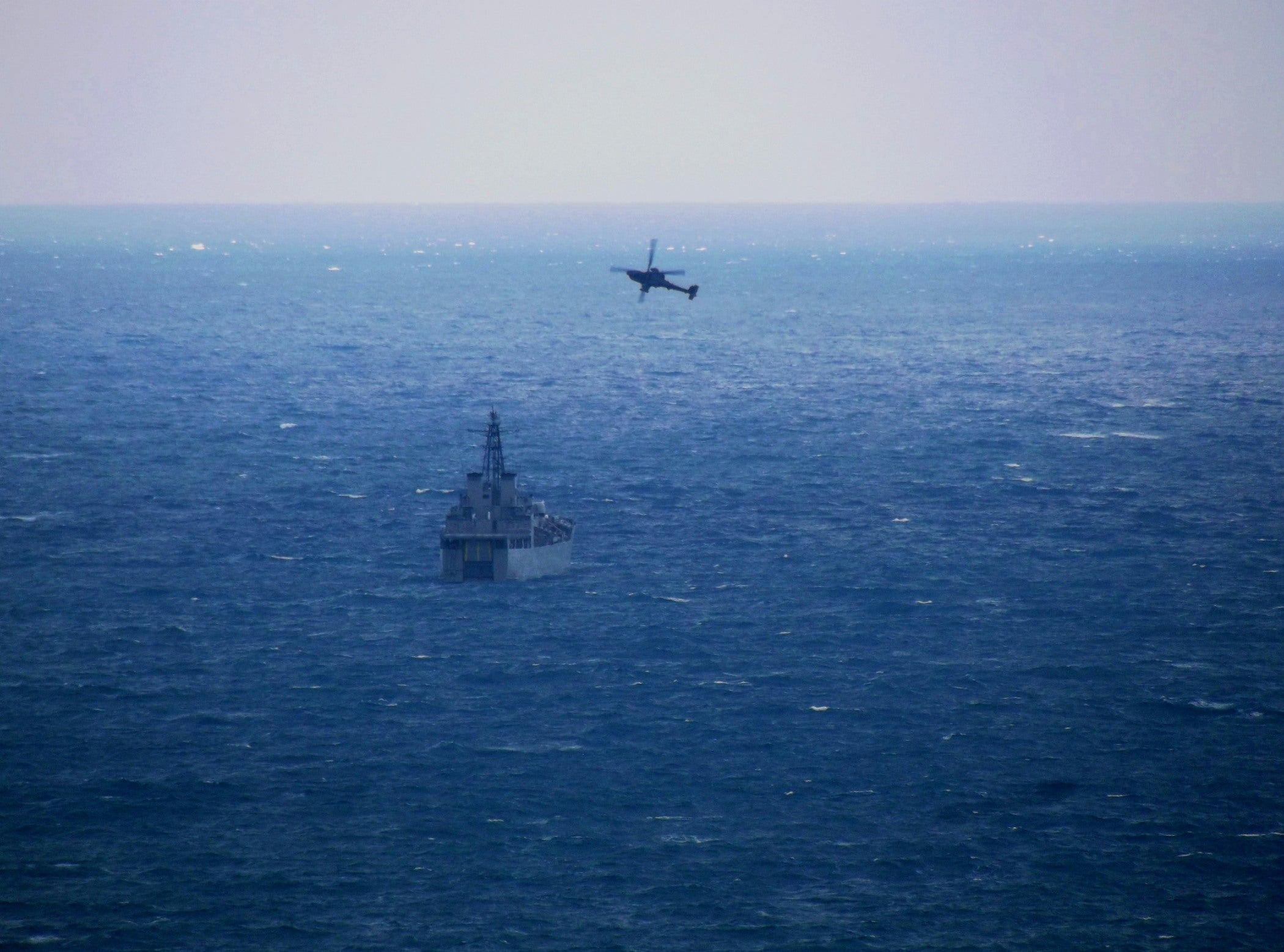
This article examines the recent attack on an Iranian warship in Sri Lanka’s Exclusive Economic Zone (EEZ) at the height of the US/Israel-Iran conflict, and its implications for neutral rights and interests, not only those of coastal States with vast EEZs and substantial economic stakes, but also of non-coastal States reliant on residual high seas freedoms in those waters, including navigation, overflight, and the laying of submarine cables and pipelines. The EEZ is a creature of the 1982 United Nations Convention on the Law of the Sea (UNCLOS), while the rules on naval warfare long predate it. This tension raises a fundamental question about the relationship between UNCLOS and the law of naval warfare, and the extent to which peacetime rights and obligations are modified during armed conflict. Among the most challenging questions is the permissible scope of belligerent operations in a neutral EEZ. Central to this discussion is whether a belligerent owes an obligation of due regard to the rights and duties of neutral States when exercising belligerent rights in a neutral EEZ. These questions are not abstract for Southeast Asian States, whose expansive EEZs, critical shipping lanes, and deep economic dependence on marine resources make them acutely exposed to the consequences of armed conflict spillover—consequences they have yet to publicly reckon with.
Setting the Scene
The torpedoing of the Iranian frigate IRIS Dena by a U.S. submarine approximately 40 M off the southern coast of Sri Lanka served as a violent reminder that modern naval hostilities are rarely contained within the belligerent territory and that the asymmetric burdens of war can fall upon neutral countries. This incident invites a closer look at how regional strategic assessments might evolve to account for this emerging reality. A recent IISS report offers an invaluable foundation for understanding Southeast Asian neutrality and regional contingency planning, and IRIS Dena is a timely prompt to consider one additional dimension: that most modern naval hostilities occur within the 200-M EEZ, making spillover into neutral EEZ not an exception but a foreseeable operational reality.
By way of background, the ocean is divided into multiple maritime zones under UNCLOS, but for naval warfare purposes, it is further divided into two categories of waters: ‘neutral waters’ (neutral internal waters, territorial waters, and archipelagic waters (if applicable)) where belligerent operations are prohibited, and ‘waters outside those neutral waters’ where certain hostile actions by belligerent forces are allowed. Some further split this latter category into ‘belligerent waters’ (waters under sovereignty of belligerents) and ‘international waters’ (EEZ of both neutrals and belligerents, and high seas).
What is important to note is that for belligerents, wartime rules are not confined to the immediate area of the underlying conflict but apply to the conduct of hostilities wherever such conduct is lawfully permitted. That said, under the law of naval warfare, which is part of the law of armed conflict, a neutral EEZ is not considered ‘neutral waters’, and belligerents are lawfully permitted to conduct hostilities therein once the threshold of armed conflict has been crossed. This means that in wartime, military activities in another State’s EEZ that would be restricted or unlawful under jus ad bellum may become permissible when assessed under jus in bello. Such operations may include attack, capture, mine-laying, visit, search, or diversion (San Remo Manual, Rule 16), or even blockade and exclusion zones (Newport Manual, Section 3.1). The existence of an international armed conflict, in other words, can dramatically expand the permissibility of belligerent operations in neutral EEZs. The question is: so what?
Obligation of Due Regard in Neutral EEZ
The EEZ is, by design, a shared space where coastal States hold sovereign rights over their resources and certain economic activities, while all other States retain some residual high seas freedoms in the EEZ, including navigation, overflight, and the laying of submarine cables and pipelines (UNCLOS, Article 58). In Southeast Asia, this makes the EEZ vital not only to coastal States with expansive maritime zones, such as Indonesia and the Philippines, but equally to those, like Singapore, whose economies also depend on the safety and security of their neighbours’ waters. At stake are the food security of a region where six of eleven States rank among the world’s top 25 fisheries producers, nearly 100,000 km2 of coral reefs (almost 34 percent of the world total), the multiple subsea data cables that carry more than 90 percent of global communications, and sea lanes that serve as a non-negotiable artery for military and commercial navigation alike.
However, the legal framework governing what belligerents can actually do in those waters is less clear than many neutral States might assume. The traditional law of naval warfare predates the modern EEZ regime established under UNCLOS, and the two regimes have never been formally reconciled. In the absence of an updated legal instrument, the rules have been shaped largely by expert manuals that are authoritative in practice, but non-binding, and crucially, are not in an agreement on the most consequential question: what obligations do warring States owe to neutral States when operating in a neutral EEZ?
The San Remo Manual on International Law Applicable to Armed Conflicts at Sea (SRM) says ‘in carrying out operations in areas where neutral States enjoy sovereign rights, jurisdiction, or other rights under general international law, belligerents shall have due regard for the legitimate rights and duties of those neutral States’ (Rule 12). Its use of “neutral States” rather than “neutral coastal States” signals that, in the context of belligerent operations in a neutral EEZ, belligerents owe this obligation not only toward the neutral coastal State, but also toward other neutral States exercising residual high seas freedoms in those waters.
If hostile actions are conducted within the EEZ or on the continental shelf of a neutral State, the SRM further stipulates that ‘belligerent States shall, in addition to observing the other applicable rules of the law of armed conflict at sea, have due regard for the rights and duties of the coastal State, inter alia, for the exploration and exploitation of the economic resources of the exclusive economic zone and the continental shelf and the protection and preservation of the marine environment. They shall, in particular, have due regard for artificial islands, installations, structures and safety zones established by neutral States in the exclusive economic zone and on the continental shelf’ (Rule 34). The SRM also requires that ‘due regard shall also be given to the protection and preservation of the marine environment’ (Rule 35).
Meanwhile, the Newport Manual on the Law of Naval Warfare (NPM) takes the opposite view. Instead of ‘due regard’, the NPM holds that belligerents have the duty to ‘respect’, an arguably lower threshold than due regard. Verbatim, the NPM says ‘when conducting military operations in the EEZ and on the continental shelf, belligerents shall, consistent with military necessity and operational requirements, respect the rights and duties of neutral States’ (paras. 4.1.2.1 and 11.3.3.8). This may also imply a prioritisation of belligerent rights instead of a balancing exercise reflecting the shared-use nature of the EEZ.
The NPM further considers Rules 34 and 35 of the SRM as lex ferenda that does not reflect the law of naval warfare (para. 11.3.3.8), and that the only due regard required is for the safe operation of ships and aircraft (para. 3.11.1). Importantly, the NPM claims to reflect a strict restatement of existing law (lex lata) based on state practice and opinio juris—the two elements required for a rule to qualify as customary international law. If the NPM’ interpretation is accepted as reflecting custom, the due regard obligation would be considered inapplicable during armed conflict and would bind all States unless they have consistently objected to this position during the formative stages of the rule.
Position of Southeast Asian States
That said, Southeast Asian States, having been largely spared the wreckage of a major great-power naval war since World War II, have had little occasion to articulate their positions on the law of naval warfare. Their silence on how their neutral EEZs should be treated in wartime, and more importantly on whether belligerents owe a due regard obligation toward neutrals when operating in neutral EEZs, risks being interpreted as acquiescence to norms they may one day wish to contest.
Sri Lanka was, in relative terms, fortunate. Yes, Sri Lankan authorities were forced to execute an immediate, large-scale Search and Rescue (SAR) mission, rescuing 32 survivors and recovering over 80 bodies from an estimated crew of 130, but the attack did not escalate further. Now consider the alternatives. What if the strike had triggered prolonged, wide-ranging hostilities between opposing belligerents in another neutral EEZ? What if, for instance, it had involved the establishment of maritime exclusion zones in Indonesia’s resource-rich Natuna (beyond 12 M from its coastline) during peak fishing seasons? What if it had occurred in the EEZ adjacent to the Traffic Separation Schemes of the Malacca and Singapore Straits, and had included the exercise of other belligerent rights, subjecting neutral merchant vessels to visit and search, or even diversion? What if the vessels attacked were nuclear-powered or nuclear-armed, raising the spectre of radiological contamination of the EEZ living resources? What if belligerent actions had included mine-laying in the EEZs of the Coral Triangle Region—what of the cumulative damage to coral reef ecosystems already under severe pressure from illegal, unreported and unregulated fishing and climate change? What if subsea cables in those EEZs were severed as a collateral damage—how many States, far beyond the immediate conflict zone, would bear the cascading consequences?
These are not hypothetical provocations. They are the foreseeable consequences of a conflict that spills beyond its intended theatre. The IRIS Dena incident has made plain that Southeast Asia’s neutral EEZs are not insulated from such spillover. The question now is whether Southeast Asian States will wait for a direct hit to their interests before publicly articulating where they stand on these rules, or whether they will recognise that ensuring their voice counts before the rules crystallise is itself a form of strategic deterrence.
Dita Liliansa is a PhD Researcher at the University of New South Wales (UNSW) Sydney, Australia. Prior to this, she was a Research Fellow at the Ocean Law and Policy Programme of the Centre for International Law (CIL), National University of Singapore (NUS), where she was based from 2018 to 2026. Her current research focuses on human rights at sea, the law of naval warfare, and emerging maritime security issues. She has published widely on ASEAN, fisheries, the marine environment, passage regimes, and Indonesia’s foreign policy. She holds a Bachelor of Laws (LLB) from the University of Indonesia and a Master of Laws (LLM) from the University of Washington, where she was a Fulbright Scholar.