
AI’s Promise of Healthy Longevity: Exploring the Implications of Extended Lifespans Under International Law
Do We Really Want to Live Forever? New CIL Publication Explores Whether International Law Is Ready for AI-Enabled Longevity

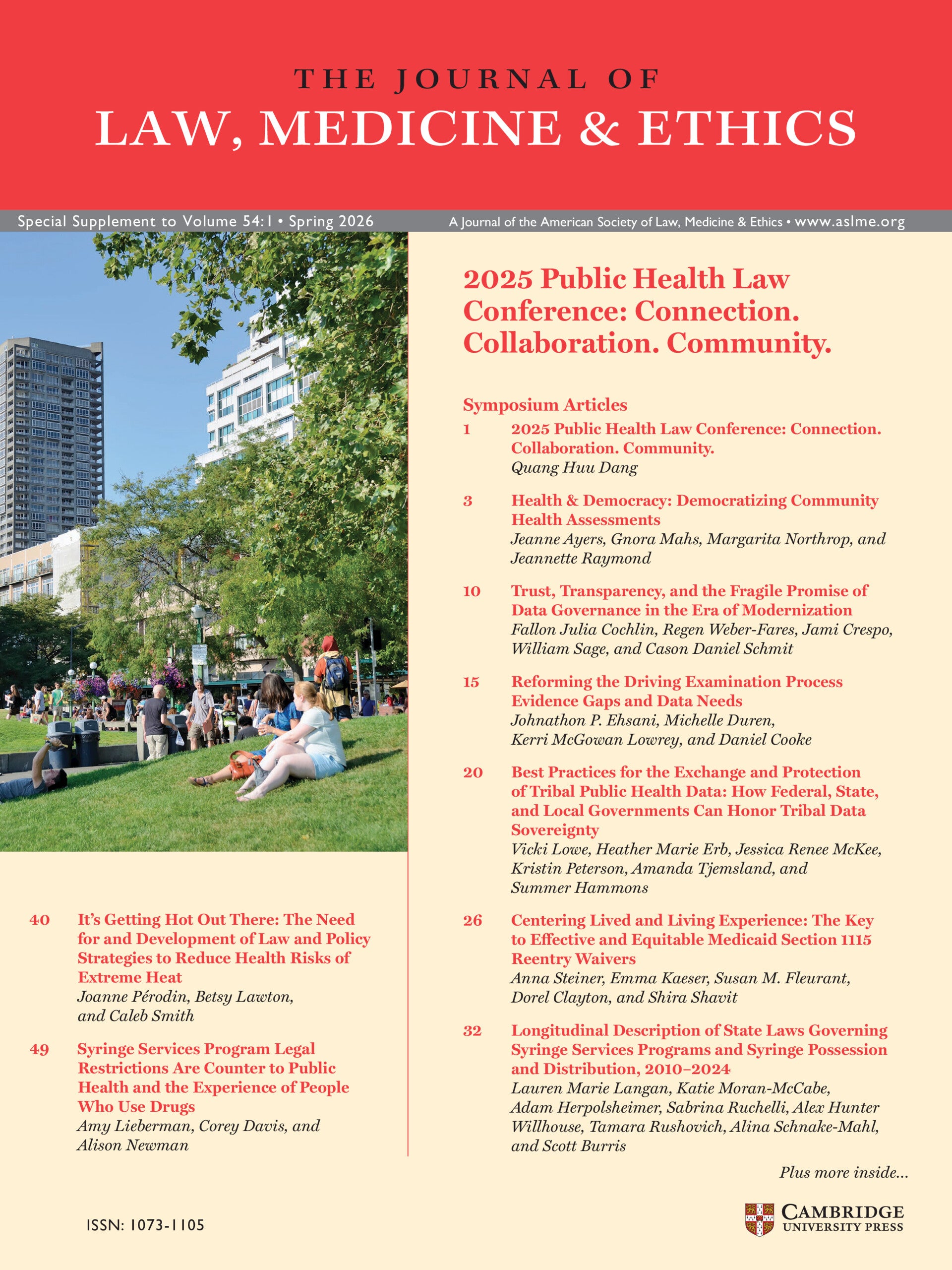
If artificial intelligence enables humans to routinely live to 120 years and beyond, what does that mean for international law, human rights, and the social fabric of our world? This is explored in the new publication ‘AI’s Promise of Healthy Longevity: Exploring the Implications of Extended Lifespans Under International Law’ published in Journal of Law, Medicine & Ethics (Cambridge University Press, 2026).
Dr Jon Truby, UNESCO Chair of AI Law and Sustainability at NUS Centre for International Law has co-authored a new article in the Journal of Law, Medicine and Ethics (Cambridge University Press) with Indira Dewi Kantiana of Saw Swee Hock School Of Public Health at National University of Singapore. The article is available open access: https://lnkd.in/danTCJ9H
The World Health Organization has declared 2021–2030 the “Decade of Healthy Ageing”, aiming for the best quality of life through health as the population ages. Beyond healthy ageing, scientists are adopting artificial intelligence technologies for longevity science which can foreseeably enable humans to routinely live to 120 years and beyond.
With such breakthroughs within reach, the challenges associated with longevity need to be considered, from the impact on the social system to the possibility of an international law right to longevity, along with associated considerations such as on sustainability.
This article questions whether there already is, or should be, an international human right to facilitate considerably extended lifespans, along with other relevant legal frameworks.
Beyond healthy ageing, scientists are increasingly deploying AI in longevity science, with some researchers projecting that dramatically extended lifespans could become routine within the foreseeable future. The article takes this trajectory seriously and asks whether legal frameworks are equipped to handle the world that may result.
At the heart of the article is a question that international law has never had to grapple with before: is there, or should there be, a recognised human right to considerably extended lifespans? The authors work through this question carefully, drawing on existing human rights frameworks, sustainability law, and broader principles of international law to assess what obligations states and the international community might bear as longevity science advances. The article also considers the social system implications of a world in which far more people live far longer, from pension and healthcare sustainability to intergenerational equity and resource allocation.
The article further explores how AI technologies driving longevity breakthroughs should themselves be governed, and whether existing international legal instruments are adequate or whether new frameworks are needed. It raises important questions about who benefits from longevity technologies, how access might be distributed globally, and what responsibilities fall on states, international organisations, and the private sector. Rather than offering easy answers, the article maps out the legal landscape and identifies where scholarly and policy attention is most urgently needed.
This article is part of CIL's broader research programme on the governance of artificial intelligence under international law, led by Dr Truby as Chair of the UNESCO AI Law and Sustainability Chair. It is available open access via Cambridge University Press.
Read the full article (Open Access): https://doi.org/10.1017/jme.2026.10262