
About the Lecture:
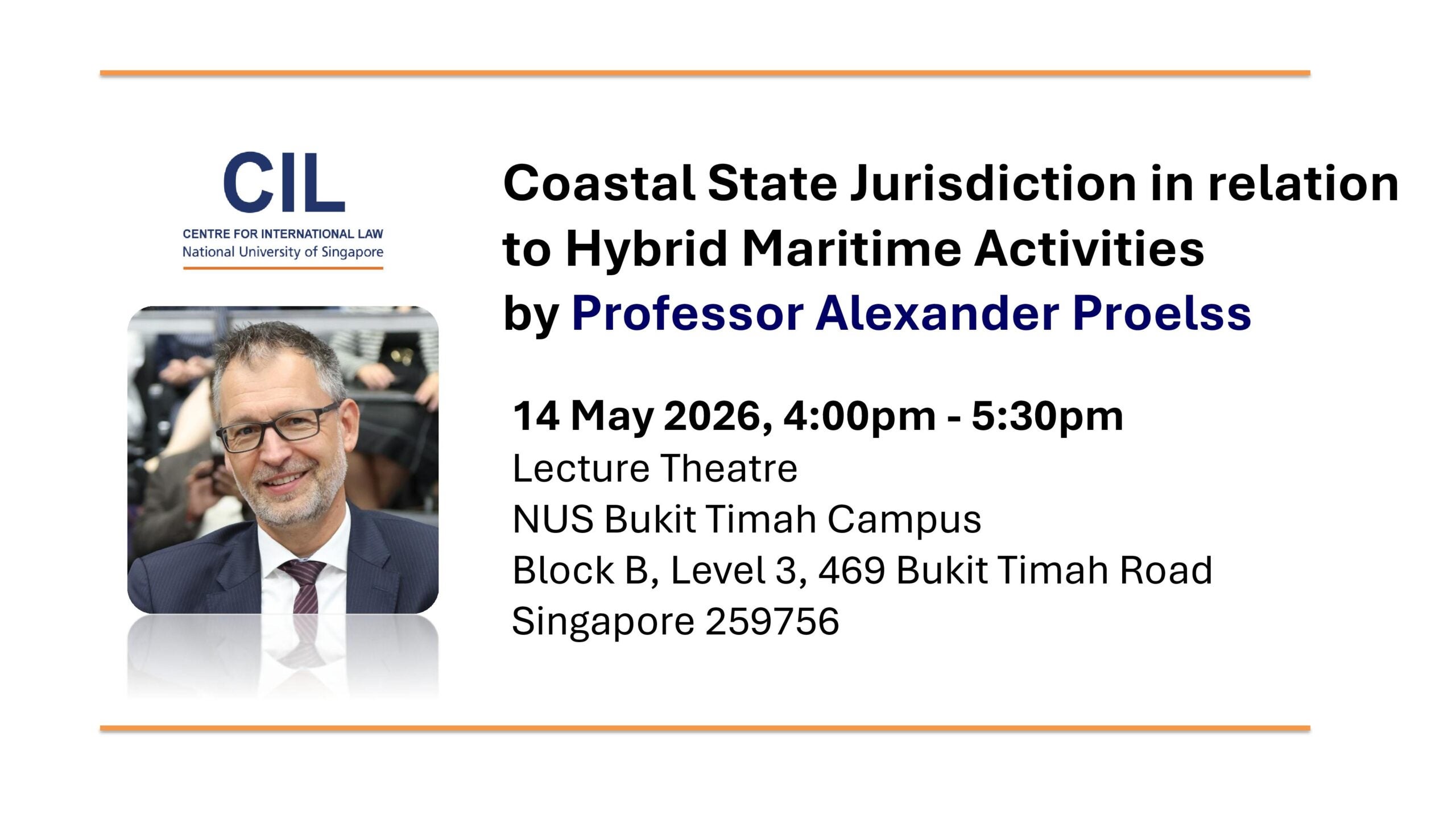
The presentation analyses the international legal framework governing coastal State responses to maritime sanction evasion and hybrid activities, in particular those linked to Russia’s “shadow fleet” in the North and Baltic Seas. It addresses key questions at the intersection of the law of the sea, the law of State responsibility, and international security law, with a focus on the legal limits and possibilities of enforcement action at sea. Applying a zonal approach under the United Nations Convention on the Law of the Sea (UNCLOS), it examines coastal State powers in internal waters, the territorial sea, the exclusive economic zone, and on the high seas, highlighting the differentiated and context-dependent nature of these competences. Particular attention is given to constraints arising from the principles of flag State jurisdiction, innocent passage, and freedom of navigation. The presentation further explores the role of general international law, notably the law of State responsibility, in justifying responsive measures. It assesses the scope and limits of countermeasures and necessity as potential legal bases for action in response to breaches of fundamental norms, especially the prohibition of the use of force.
About the Speaker
Professor Alexander Proelss holds the Chair for the Law of the Sea and International Environmental Law, Public International Law and Public Law at the Faculty of Law of the University of Hamburg, where he also serves as the Director of the Institute for the Law of the Sea and Maritime Law (ISSR). His research centres on international environmental law and the law of the sea, while also extending to general international law, European Union law, and constitutional law. He is widely known as the editor of the Commentary on the United Nations Convention on the Law of the Sea (2017), a leading reference work in the field.
Alexander Proelss has co-led and contributed to numerous major national and international research initiatives and has served on three committees of the International Law Association. He has extensive experience advising State authorities, international organizations and private actors on issues of public international law. He has held visiting professorships at leading universities worldwide and regularly teaches and lectures at international conferences and academic programmes.
REGISTRATION
"*" indicates required fields