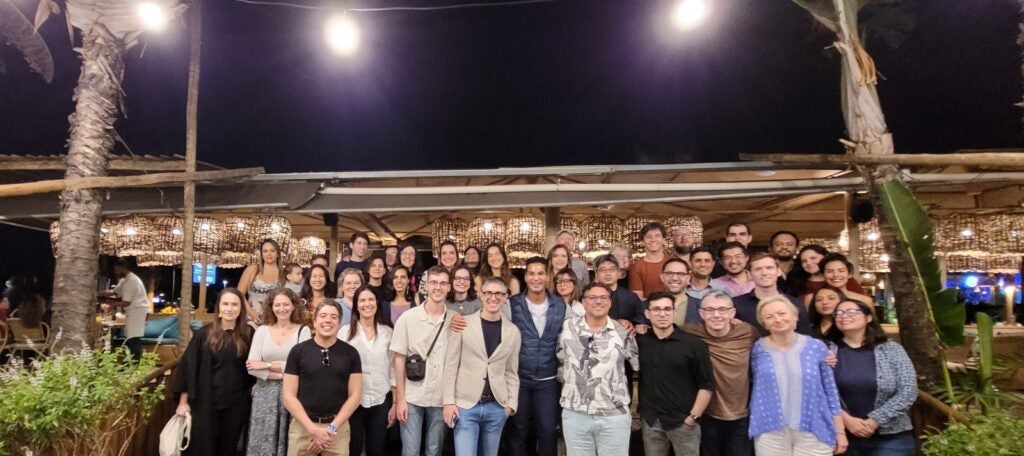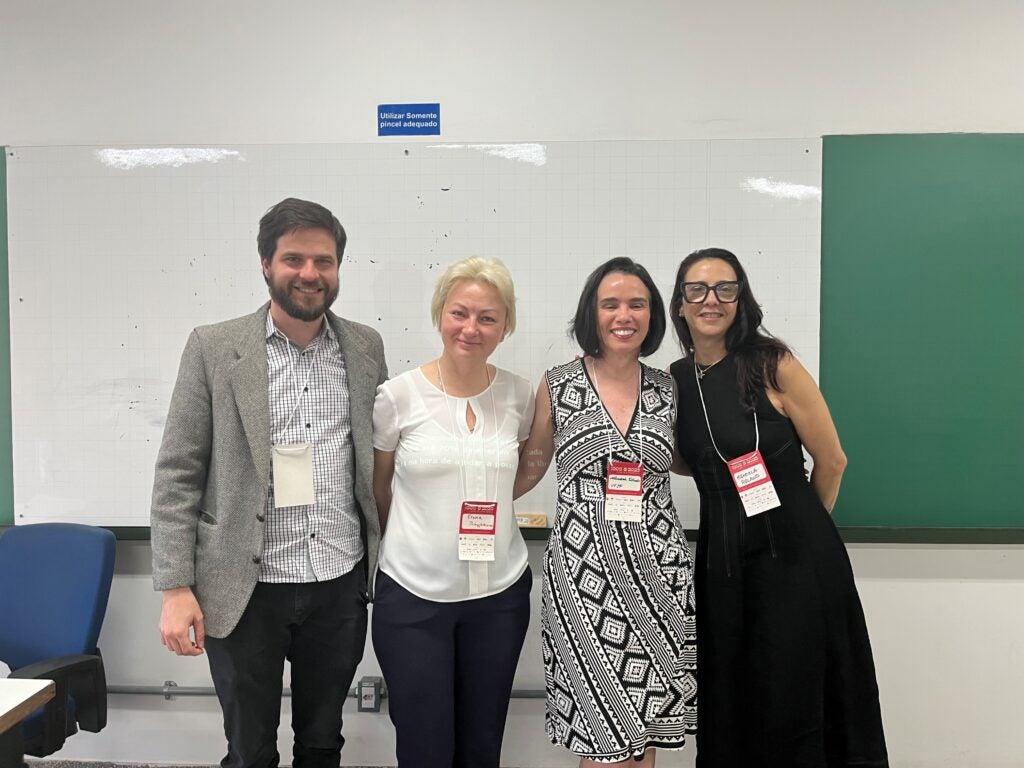
Elena Pribytkova organized and chaired two panels at ICON-S Annual Conference “At the Crossroads of Public Law: Equality, Climate Emergency, and Democracy in the Digital Era” in Brazil
 Dr. Elena Pribytkova has organized and chaired two panels – (1) “Environmental Justice Between Human-Centrism and Eco-Centrism” and (2) “Development Assistance: Patterns, Critique, and Solutions” – at ICON-S Annual Conference “At the Crossroads of Public Law: Equality, Climate Emergency, and Democracy in the Digital Era” (Jul. 28-30, 2025), Brasília, Brazil
The panel “Environmental Justice Between Human-Centrism and Eco-Centrism” focused on one of the most complex and controversial issues relating to environmental justice, i.e., the possibility and strategies to balance human-centrism, which requires ensuring environment adequate for humans’ well-being, health, and development, and eco-centrism, which demands guarantees necessary for a harmonious co-existence of humanity and the nature. From theoretical and practical perspectives, the panellists analysed a set of topical problems, including climate change and climate migration, global obligations for environmental justice, territorial and extraterritorial environmental policies, mitigation of environmental destructions, the role of vulnerable groups, including indigenous communities and women, in maintaining global ecosystems and shaping environment-related policies, as well as the interrelation between environmental justice and human rights, especially the right to healthy and sustainable environment, the right to a decent standard of living, and the right to development. The panel paid special attention to the rights of non-human species and the nature and aims to clarify what changes in international law, especially environmental and human rights law, and sustainable development agenda are necessary for legal recognition and implementation of these rights.
The panel “Development Assistance: Patterns, Critique, and Solutions” addressed development assistance in its broad interpretation, i.e., including both extraterritorial assistance in the realization of human rights and in the achievement of sustainable development goals. It critically assessed the existing normative framework, mechanisms, and practices of development assistance that are extremely inefficient, insufficient, very often fail to consider the actual needs of the addressees of assistance and violate their fundamental rights, and are frequently used as instruments of (neo-)colonial domination. The panellists discussed a range of problems related to this topic, including human rights law’s and Sustainable Development Agenda’s approaches to regulate development assistance, a right to global assistance and corresponding obligations of states and non-state actors (including business), Official Development Assistance, as well as the linkage between social support and development assistance policies and practices. The panel also analysed strategies of efficient governing, innovative methods, and good practices (including those applying digital technologies) of implementing development assistance as well as ways on how international, regional, and domestic instruments governing development assistance and mechanisms used to realize them might be substantially reshaped.
PRESENTER
Dr. Elena Pribytkova also presented two papers at the conference.
Her paper “Global Obligations for Environmental Justice: Harmonizing Human-Centrism and Eco-Centrism in Contemporary Global Order” conceptualized obligations for environmental justice (including climate justice) as shared, both negative and positive, obligations of global actors (states, non-state actors, and individuals). The paper specified the nature, status, content, scope, right-holders, and duty-bearers of global obligations for environmental justice. Appealing to contemporary discourse, normative and institutional framework, case law, and practices concerning environmental justice, she examined the possibility and ways to balance human-centrism and eco-centrism. She also analyzed strengths and weaknesses, and complementarity of the rights-based and obligations-based approaches to environmental justice. I scrutinize environmental human rights and the rights of the nature and non-human beings and discuss what substantial changes their legal recognition and realization are calling for as well as what role should environmental law, human rights law, and sustainable development agenda play in this process.
Her paper “Do We Have a Right to Global Assistance?” addresses an ideological rift between the so-called Global North and Global South. Even those developed states of the Global North, which recognise obligations to assist developing countries explicitly assert that these obligations are not grounded in any “right” to assistance, but rather in global solidarity. Global South countries, on the contrary, insist on the legal recognition and institutionalization of the right to assistance and the corresponding obligations of the international community. I suggest a new conception of the right to global assistance as a human right, which is conditional on individuals’ inability to enjoy the right to social support from their state. I argue that current practices of state-centric international assistance, which are extremely insufficient, inefficient, often violate human rights and are used as tools of (neo-)colonial domination, must be substantially reshaped in light of the individuals’ right to assistance and be supplemented with instruments of person-centric global assistance. This presupposes three essential measures: (a) enabling marginalised individuals, as primary holders of the right to assistance, and their democratically represented communities to submit direct requests for global assistance; (b) ensuring poor individuals’ and communities’ participation in, and control over, the processes of seeking, receiving, and distributing international assistance that should be facilitated by states; and (c) fairly distributing obligations, corresponding to the right to global assistance, among all members of the international community.