

Breaking the impasse: towards a new convention to prevent and punish Crimes against humanity.
by Pablo Arrocha Olabuenaga and Natalia Jiménez Alegría
Published on 21 April 2025
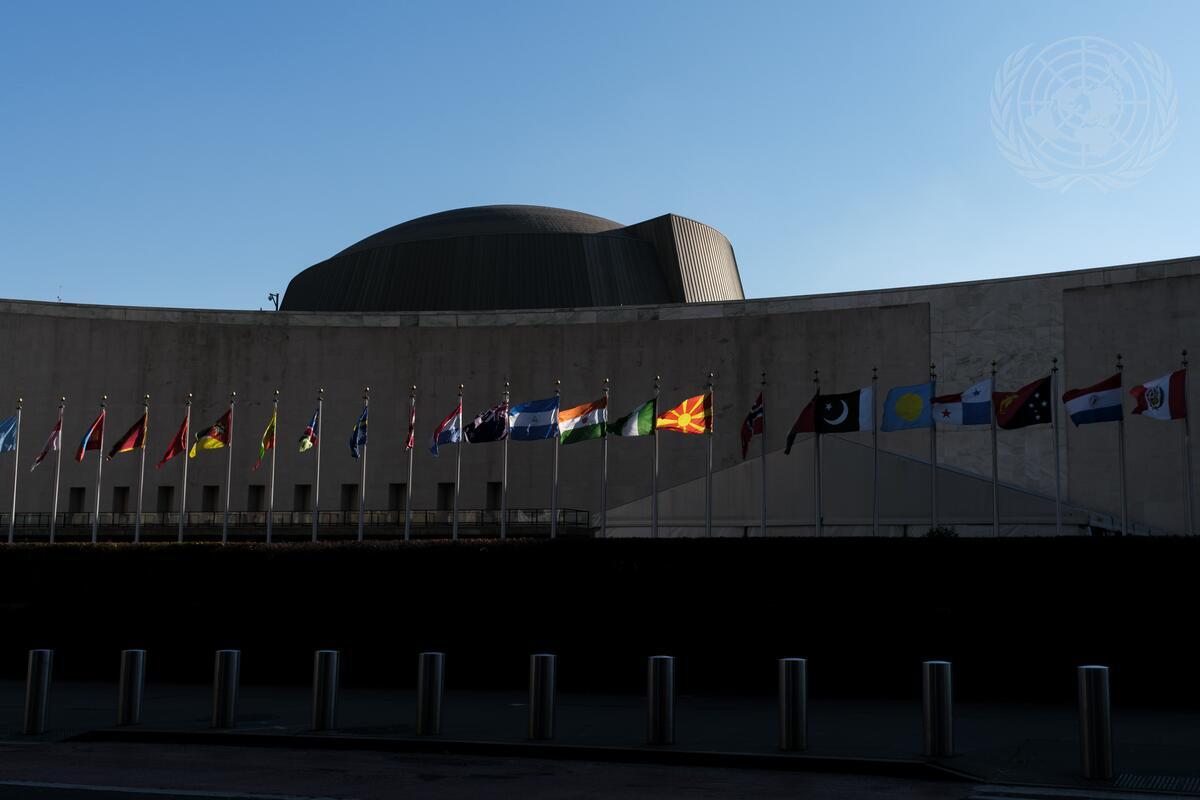
Photo Credit: UN Photo/Manuel Elías
Background
The mandate on the progressive development and codification contained in article 13 of the UN Charter has historically been a priority for Mexico. This has been reflected in its active participation and engagement in the work of the International Law Commission (ILC) and the General Assembly’s Sixth Committee (6C).
The last instance in which the UN adopted a multilateral treaty based on draft ILC articles was the 2004 Convention on Jurisdictional Immunities of States and Their Properties (the draft of which was concluded by the ILC in 1991, that is 13 years before its final adoption by the General Assembly). This has led some to claim that nowadays “States seem to be less interested in binding treaties”. If this were the case, though, how can it be explained that during this same period of time the UN has indeed adopted several multilateral treaties such as The Arms Trade Treaty (2013), the Paris Agreement (2015), the Treaty on the Prohibition of Nuclear Weapons (2017), the Agreement under the United Nations Convention on the Law of the Sea on the Conservation and Sustainable Use of Marine Biological Diversity of Areas beyond National Jurisdiction (2023) and the UN Convention against Cybercrime (2024)? This certainly requires a deeper analysis. Suffice to say that all the treaties cited above have one thing in common: none of them were negotiated or adopted under the auspices of the 6C – a body that traditionally operates under the basis of “consensus”.
There are nine ILC concluded draft articles, dating back to 2001, pending a decision on their status by the 6C. This impasse included also the Draft articles on Prevention and Punishment of Crimes Against Humanity (DACAH), aimed at filling an almost 80-year gap in international criminal law.
Today, thanks to the leadership of Mexico and The Gambia, a long-overdue process is finally underway after the adoption of resolution 79/122 last November. But the road to get here was not easy.
The ILC developed its DACAH between 2015 and 2019. The Commission’s products are the result of extensive research and exchanges among its members. Each year, the ILC reports to the 6C the progress made in the different topics under consideration. The 6C then discusses the report and States can provide comments on each topic. They can also send written comments directly to the ILC. From 2015 to 2019, more than 50 comments were received by the ILC from governments and more than 10 from other international bodies regarding the DACAH. The ILC adopted by consensus the final draft in 2019, which was sent to the 6C that same year with the recommendation to elaborate a convention by the General Assembly or by an international conference of plenipotentiaries based on the draft Articles.
Discussions in the Sixth Committee
The 6C examined the ILC report containing the DACAH in 2019 and negotiated a draft resolution addressing the way forward regarding the draft articles and the recommendations by the ILC.
As it has been the dynamic in the 6C for many years now, negotiations quickly turned into the dichotomy of delegations in favor and against a convention, rather than focusing on the substance of the DACAH, the recommendation of the ILC and a possible process that would lead to progress. Since the beginning, Mexico played an active role in fostering a discussion based on the ILC recommendation and on outlining a process to achieve this goal. Given the opposition of a few delegations, the resolution adopted that year only took note of the draft articles and decided to “continue to examine the recommendation of the Commission” the following session.
In 2020, things proved to be even more challenging. The COVID-19 pandemic added a layer of complexity that did not allow for negotiations. The previous decision to “continue to examine” the topic was repeated, in a pattern of “technical rollovers” (the characteristic vortex of inertia in the 6C) that consolidates inaction. In 2021, with a hybrid and in-person dynamic, negotiations continued to be complex. Even when there was a significant number of States ready to move forward to a process that would eventually lead to negotiations, a minority of delegations still were not allowing the 6C to act. In this context, Mexico dissociated from consensus breaking the pattern of agreed technical rollovers.
Breaking the impasse: resolution 77/249 (2022)
The cycle of inertia led to frustration from those supportive of moving towards negotiations. To break free from it, in a bold and creative move, a group of eight delegations decided to present themselves a draft resolution on the topic of Crimes Against Humanity – a practice that is uncommon in the 6C regarding ILC topics but that is fully in accordance with the General Assembly Rules of Procedure. Even when there was a very strong backlash from few states opposing a process moving forward, this strategy proved to be very successful. In 2022, the General Assembly adopted, by consensus, resolution 77/249, cosponsored by 86 States from all regions of the world, which laid out a process to discuss the substance of the DACAH through two 6C resumed sessions and to take a decision in 2024 on whether to convene a negotiating conference.
The road towards the decision-making process on the 79th session (2024)
Following the adoption of resolution 77/249, preparations began for the two 6C resumed sessions to be held in April 2023 and in April 2024, respectively. In each session, the DACAH were discussed article by article, providing an opportunity for delegates to consider them in depth.
To facilitate discussions, the DACAH were divided into five thematic clusters. In the 2024 resumed session, the recommendation by the ILC to elaborate a convention based on the draft articles was also addressed.
These resumed sessions were successful. Different positions were expressed, new proposals emerged, and a renewed sense of collegiality was brought to the 6C. Proposals to codify gender apartheid and other gender related crimes as well as slave trade as a new crime were made during these sessions. A summary of the different views expressed on each thematic cluster can be found here.
Moving forward to negotiations on a future treaty to prevent and punish crimes against humanity
In 2024, Mexico and The Gambia repeated their strategy of presenting a country-led draft resolution, of a procedural nature, to the 6C regarding the DACAH to decide on the convening of a conference to negotiate a future convention. Undoubtedly, the rich debate during the resumed sessions proved useful in gathering support among delegations to move from a deliberative to a negotiation stage. Negotiations in the 6C last fall were not easy and there was a lot of tension throughout the whole process and until the very end.
Finally, with the co-sponsorship of 99 delegations and, again, by consensus, resolution 79/122 was adopted on 4 December 2024. The General Assembly decided “to convene the United Nations Conference of Plenipotentiaries on Prevention and Punishment of Crimes against Humanity, to meet at United Nations Headquarters in New York for three consecutive weeks in early 2028, and for three consecutive weeks in 2029”.
After five years of discussions, and almost ten years after the ILC took up this topic, the 6C was finally able to break the impasse and is moving now towards a new convention to prevent and punish crimes against humanity. This could not have happened without the tireless efforts of many committed delegations and the invaluable support of civil society organizations.
Hopefully this precedent serves to break the impasse and inertia regarding other ILC topics, it boosts the 6C dynamics and brings it back to a path of codification and progressive development of international law that had been abandoned for so many years.