

The Road to a Conference of Plenipotentiaries
on Prevention and Punishment of
Crimes Against Humanity
by Ana Paula Lavalle Arroyo and Sergio E. Delgado Fernández
Published on 26 April 2025
Background
A previous contribution to this journal, here chronicled the complex uphill process that culminated in the adoption of General Assembly resolution 79/122 (2024), which broke a five-year stalemate in the Sixth Committee to set in motion a long-overdue process toward negotiating a convention on the prevention and punishment of crimes against humanity. That piece traced how the Draft Articles on Prevention and Punishment of Crimes Against Humanity of the International Law Commission (DACAH), sent in 2019 to the Sixth Committee, navigated a path fraught with resistance, ultimately arriving at a historic breakthrough thanks to sustained leadership by Mexico and The Gambia and the unwavering support of 86 States from all regions of the world. This follow-up entry picks up where it left off, focusing on the negotiation process of resolution 79/122, its implementation, and the way forward to the preparatory steps for the UN Conference of Plenipotentiaries in 2028 and 2029.
Resolution 79/122: A Path to Negotiations
Under the mandate of resolution 77/249, which decided that the Sixth Committee, at the seventy-ninth session of the General Assembly, would decide on the DACAH, Mexico and The Gambia circulated a “zero draft” resolution at the start of the session in September. This draft resolution laid out the proposed mandate, modalities, and timeline for convening a Conference of Plenipotentiaries to negotiate a new treaty based on the ILC’s Draft Articles.
The text quickly gained traction. With 63 co-sponsors at its initial circulation, the hope for closing the historic gap in international law was finally on the horizon. Yet, the path was a difficult one. To continue paving the way towards a Convention, informal consultations and targeted bilateral engagements were held, aiming to bridge gaps and garner further support for the resolution—especially with delegations that had previously expressed reservations or had not yet taken a position.
The co-facilitators wanted to demonstrate that despite skepticism, the Sixth Committee was, and is, capable of making the right decision by speaking with a united voice to take action to settle this historic debt. Three informal meetings were convened during the Sixth Committee session to present the draft and facilitate discussions amongst all delegations. From the outset, beyond divided narratives between the support and opposition for the resolution, four main topics were the center of negotiations: (i) the role of the DACAH as basis for negotiations of a future convention; (ii) the time frame for the negotiations; (iii) the possibility of a further substantive analysis and the need for the possibility to present textual proposals before the conference; and (iv) the modalities for the conference, including the role of civil society organizations not having a consultative statute before ECOSOC.
To foster greater cohesion and ensure an inclusive and open negotiation process, the co-facilitators extended an invitation to provide all delegations the opportunity to send written comments on their draft. Of the four written submissions received – mostly by states that were not supportive – three advocated for sending the draft articles back to the ILC questioning the character of the DACAH as the basis for negotiations, in an attempt to stall the process towards negotiations. This approach was decisively rejected by the majority of States considering that although the DACAH could benefit from further refinement, they offered a balanced and constructive starting point for negotiations, consistent with the ILC’s recommendation. It was never the intention to rubber-stamp the DACAH; their authority to set the stage for negotiations stemming from its balanced and technical approach was unquestionable.
Only one proposal offered constructive suggestions to improve the process. Six African States and the United Arab Emirates (A6+1) submitted comments reflecting concerns about timing, expressing the need for further substantive engagement on the DACAH, and for States to have the opportunity to submit textual proposals before the conference. A view was expressed for the need to promote and guarantee further dissemination, interest, and understanding of the DACAH at all levels of government to effectively engage in meaningful negotiations of a universal legal binding instrument. These contributions were instrumental in shaping a revised version of the draft resolution.
The efforts to bring everyone together were not easy, but the State of Palestine, together with the Chair of the Sixth Committee’s team, played a crucial role in facilitating the dialogue and offering bridging positions. A compromise was reached, allowing for more preparatory work while safeguarding the integrity of the original goal: a negotiating conference. On November 18th, a revised text was circulated, calling for a conference to be held in 2027 and 2028, preceded by two sessions of the Preparatory Commission, one focused on substance and another on procedural aspects. The process set in the revised draft allowed States to submit textual proposals and considered the DACAH as the basis for negotiations, along with the written proposals submitted by States, and the comments presented during both resumed sessions. The process also contemplated the participation of civil society organizations that do not have a consultative status in ECOSOC during the conference. It was a balanced text; however, some delegations still had concerns about the timing, the centrality of the DACAH as the basis for negotiations, and the participation of civil society during the conference.
Parallel to these negotiations, the Chair of the Sixth Committee engaged in negotiations with some of the most extreme positions, trying to forge a consensus. Nevertheless, no agreement was reached after consultations as four delegations maintained their position that the convening of the conference was a red line. The latter, despite the vast majority of states expressing the compromise to move forward. On two occasions, these efforts were denied, which led to the Chair of the Sixth Committee informing all delegations that no agreement was reached from his negotiations and inviting States to exercise the utmost flexibility and continue engaging with each other.
Taking action: the day of the adoption
With 99 co-sponsors backing the revised draft and no further room for negotiations, document A/C.6/79/L.2/Rev.1 was officially tabled and presented for consideration to the Sixth Committee on the very last day of its session. In reaction, the Russian Federation presented amendments that sought to fundamentally alter the resolution’s intent—replacing the conference with a working group of the Sixth Committee and re-engaging with the ILC. The proposal was perceived as an attempt to delay the negotiations and undermine the DACAH as the basis for negotiations.
On November 22nd, the Sixth Committee began the consideration of draft resolution A/C.6/79/L.2/Rev.1 (which later on became resolution 79/122) at 10:30 a.m., but the Russian Federation took the floor to ask the Chair to suspend the meeting to give more time to negotiate in the name of consensus. At this stage, the adoption of the draft resolution was threatened to be mired by the Sixth Committee’s practices. The tradition of consensus has served to promote universality but too often acts as a de facto veto power for a few to block significant progress on sensitive or complex topics despite the will and interest of the majority.
Doubts also arose as to whether the proposed amendments truly constituted amendments or rather a competing draft resolution, given that most operative paragraphs were deleted, and the core objective of the resolution was struck out. This situation could have triggered procedural motions on the nature of the amendments, an area still largely unexplored in the Sixth Committee’s decision-making process, given that recently it has operated under the basis of consensus, avoiding any type of votes –procedural or substantive. However, procedural motions do not adopt resolutions or any kind of substantive document but rather highlight questions on the Rules of Procedure. Hence, if a State were to question any procedural aspect and called for a vote in the Sixth Committee, this should not be taken as breaking the tradition of consensus. Despite different opinions, the question of whether the long-standing tradition of consensus applies to both substantive and procedural matters remains to be further analyzed.
As efforts to reach consensus faltered, and after hours of a postponed consideration, the co-facilitators, together with the Chair of the Committee, proposed a package of oral amendments that addressed some of the remaining concerns. These included extending the timeline of the conference, which will now take place in early 2028 and 2029; allowing the submission of textual proposals, to be compiled by the Secretary-General and be part of the basis for negotiations; the Preparatory Committee’s role, which is now tasked with holding two sessions, one substantive and one procedural; and on stakeholders that do not have ECOSOC consultative status, which will be defined during the first PrepCom.
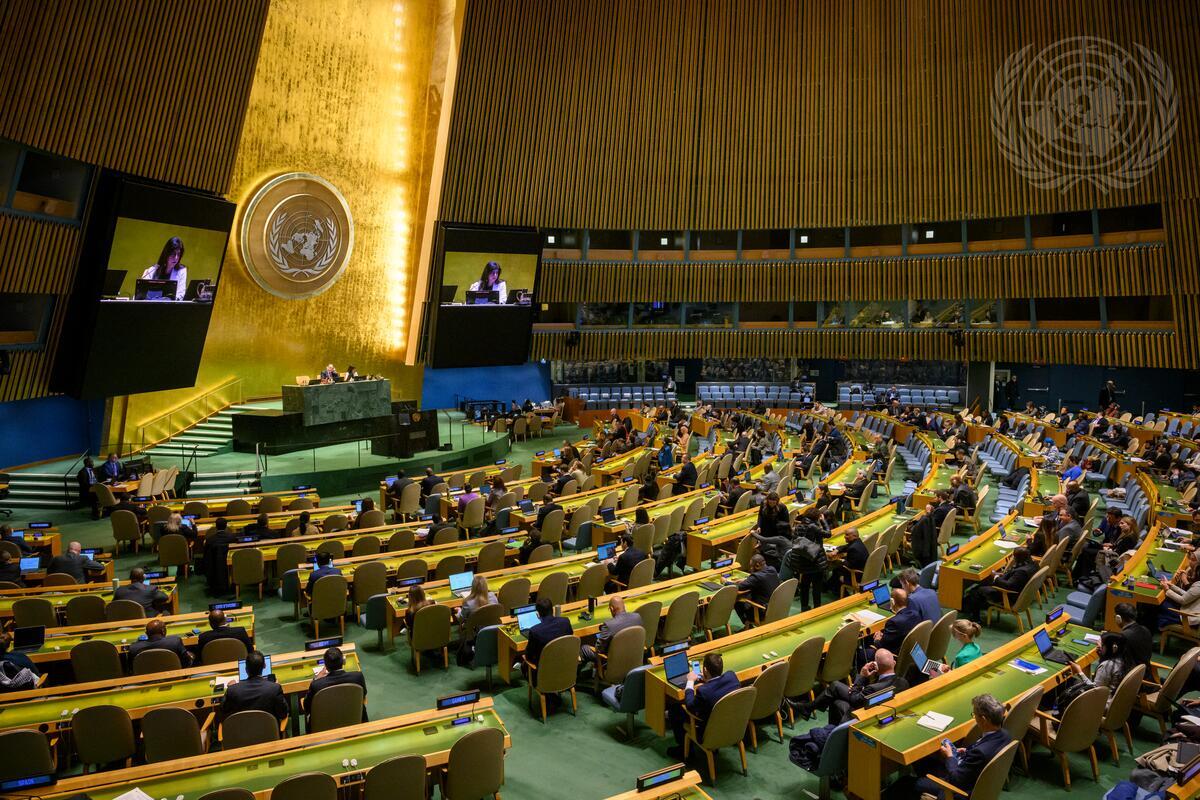
After intense negotiations, and with a real possibility of moving forward only through a vote, the Russian Federation withdrew its amendments and allowed the resolution to be adopted without a vote, not without dissociating from consensus—an outcome that had seemed elusive until the very final hours. On 4 December 2024, after 5 years of consideration in the Sixth Committee and a 75-year-long overdue historic gap in international law, resolution 79/122 was adopted also without a vote in the plenary of the General Assembly.
Looking Ahead: Laying the Groundwork for a New Convention
The adoption of resolution 79/122 is not the end of the road; it is the beginning of a new chapter that will define an essential area of international law largely overlooked for almost a century. Now the real work begins: negotiating a treaty that lives up to the seriousness of the crimes it seeks to prevent and punish.
Resolution 79/122 now sets the stage for a five-year process, including two sessions of three weeks in 2028 and 2029, of the United Nations Conference of Plenipotentiaries to elaborate and adopt a Convention on the Prevention and Punishment of Crimes Against Humanity.
The process of implementation will start in January 2026, with the celebration of the first Preparatory Committee (PrepCom) that will meet for two consecutive weeks. During this PrepCom, States are expected to (a) make a final decision on participation of non-governmental organizations, civil society, academia, and the private sector that do not have ECOSOC consultative status based on the list compiled by the President of the General Assembly, and (b) participate in the working group, which shall meet to facilitate consultations on the draft articles, and to enable Governments to prepare formal proposals for amendments to the draft articles.
Following the first session of the PrepCom, States are expected to submit proposals for amendments to the DACAH to the Secretary-General by 30 April 2026. These submissions will form the basis for a compiled text, which the Secretary-General is requested to prepare and present to the Preparatory Committee at its second session.
As States prepare to submit their proposals, it will be essential for them to consult with experts, academics, and other key stakeholders, identify national priorities, and look for common ground with other countries. The lead-up to the Conference will be a critical window for building alliances that can shape a strong, human rights-based convention, one that is practical, enforceable, and truly delivers the access to justice that victims deserve.
Consultations with these stakeholders could be conducted through conferences, seminars, national or regional consultations, and informal meetings. Such spaces for dialogue would allow States to engage constructively with the insights emerging from academic research and field-based practice, fostering a more informed and inclusive approach to policy development.
It is worth recalling that the very idea of establishing a convention on crimes against humanity originated in academia. In 2008, Professor Leila Sadat launched the Crimes Against Humanity Initiative in collaboration with an international Steering Committee composed of leading scholars and practitioners in the field of international criminal law. This initiative identified the need for a treaty dedicated to the prevention and punishment of crimes against humanity, ultimately producing a model draft, which surely ultimately served as a good reference for the ILC during its consideration from 2015 to 2019.
Much remains to be reviewed regarding the substance of the DACAH, particularly in areas such as definitions, including new crimes, the scope of the obligation to prevent, jurisdiction, and the obligation of aut dedere aut judicare, to name a few. The work carried out during both resumed sessions, as reflected in the reports of the chair and the co-facilitators (here and here), could be a good starting point. However, it remains to be seen how the geopolitical context will evolve as we approach the conference in 2028 and how it will influence the negotiations of a much-needed strong convention on the prevention and punishment of crimes against humanity.
Perhaps what initially seemed like a dilatory tactic to postpone the conclusion of the conference up until 2029 may, in the current context, prove beneficial in building the necessary momentum and avoiding excessive politicization in an increasingly polarized geopolitical environment. Time will tell. However, it would be up to the States to live up to their commitment and remain steady in the current challenging global scenario. Still, the potential of the future convention to strengthen capabilities at both national and international levels and to guarantee justice for victims is unparalleled. There is no doubt, the world needs a convention on crimes against humanity, and States must ensure and make the most of this opportunity to negotiate a convention that will ultimately lead to the prevention and punishment of these heinous crimes – which additionally will serve to reinforce the relevance of the U.N. itself in these dire times.
The achievement of adopting resolution 79/122 also marked a turning point for the Sixth Committee and a significant improvement in the relationship with the International Law Commission and the treatment of its products. It demonstrated that with the leadership of bold countries, political will of supportive States, and inclusive dialogue, the Committee can fulfill its role in shaping international law and reaffirm the ability of the General Assembly to deliver on the UN Charter’s mandate for the progressive development and codification of international law. It also sets a precedent for how States can overcome procedural inertia, balance inclusivity with progress, and unlock negotiations on long-stalled issues; an approach that could pave the way for the future consideration of other products of the International Law Commission still in the agenda of the Sixth Committee and others to be addressed soon. Though the future is still uncertain and reality continues to pose new and evolving challenges, international law remains the best avenue to achieve international peace and security, human rights enjoyment, and justice for all.