


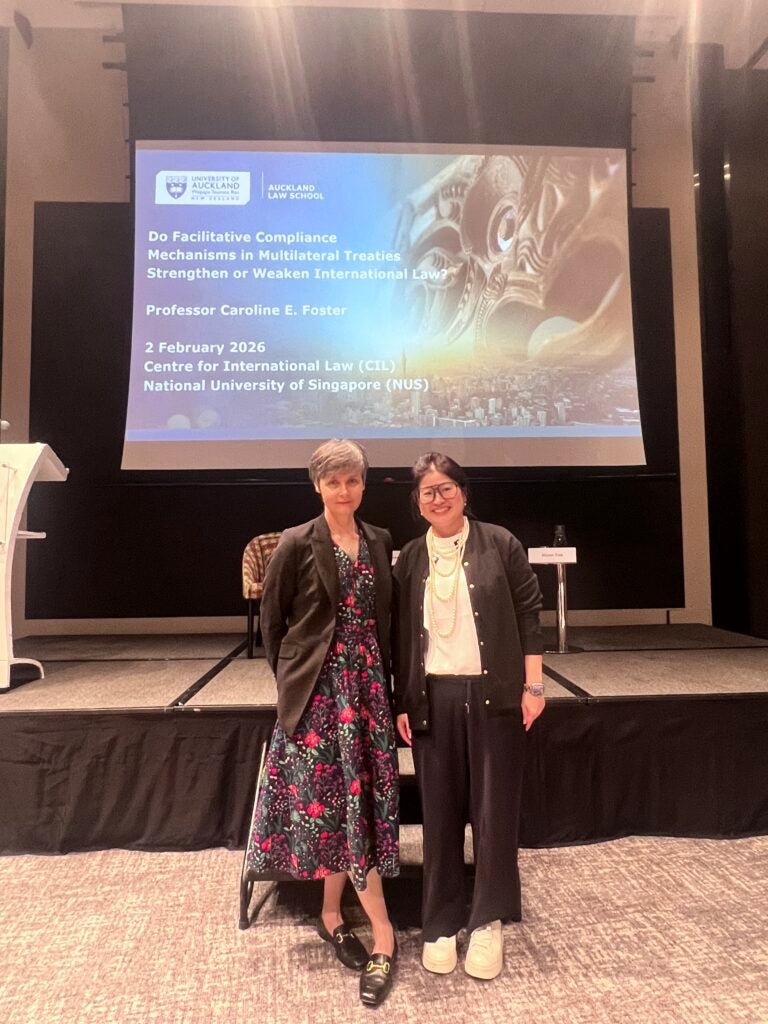
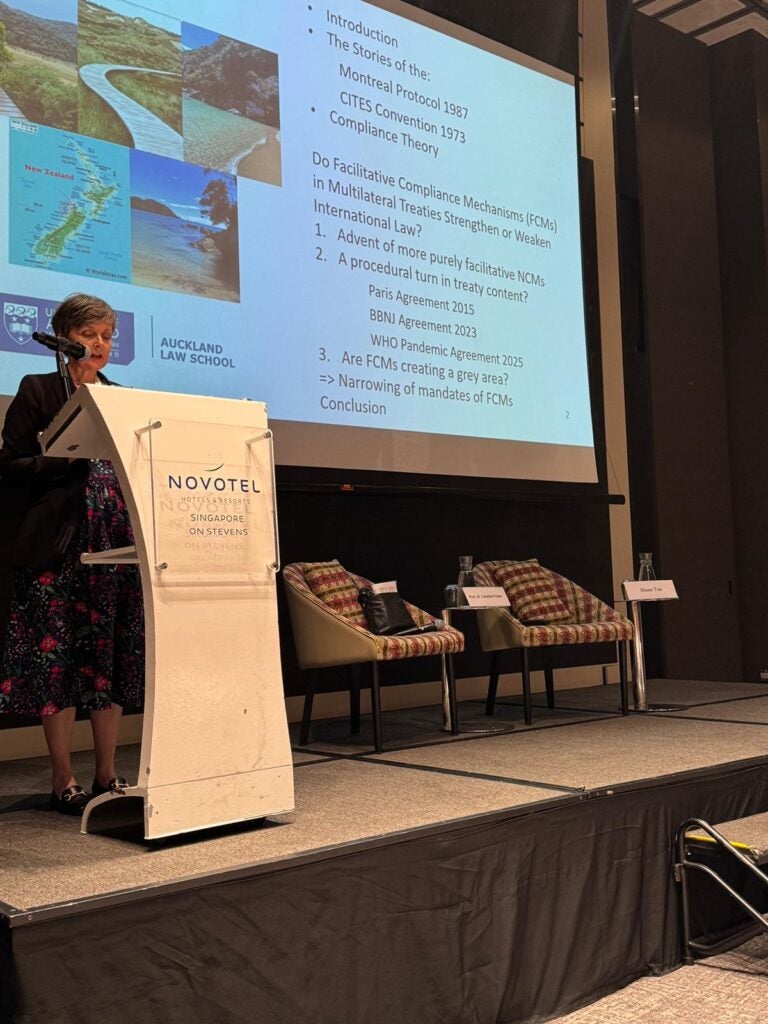

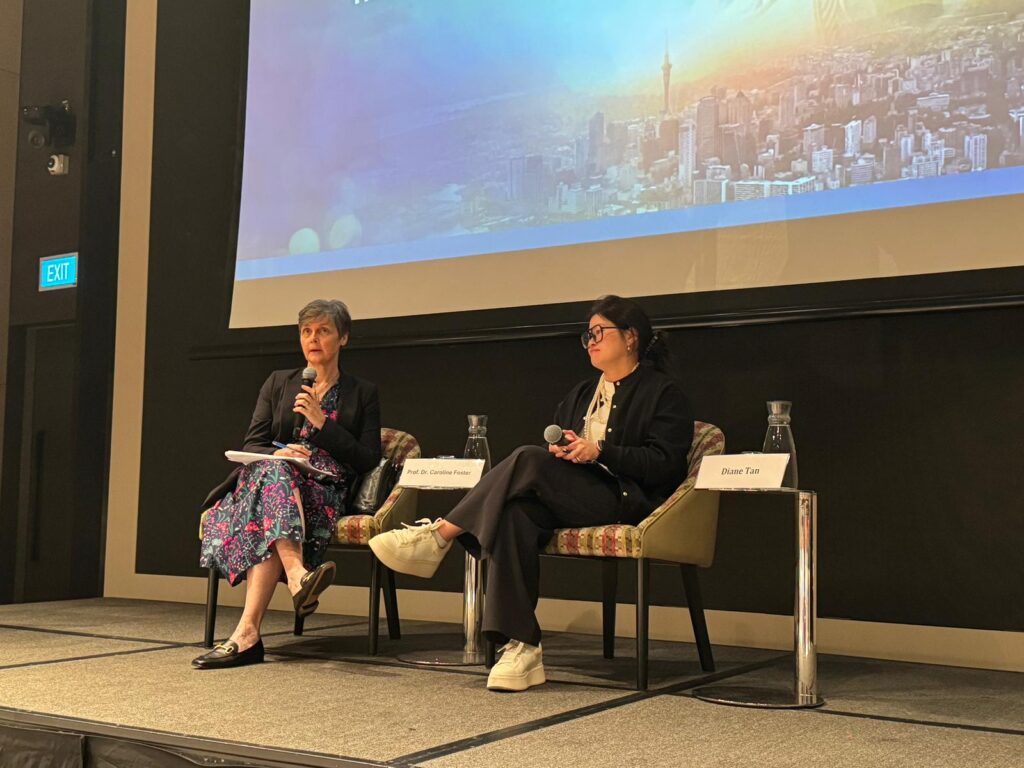
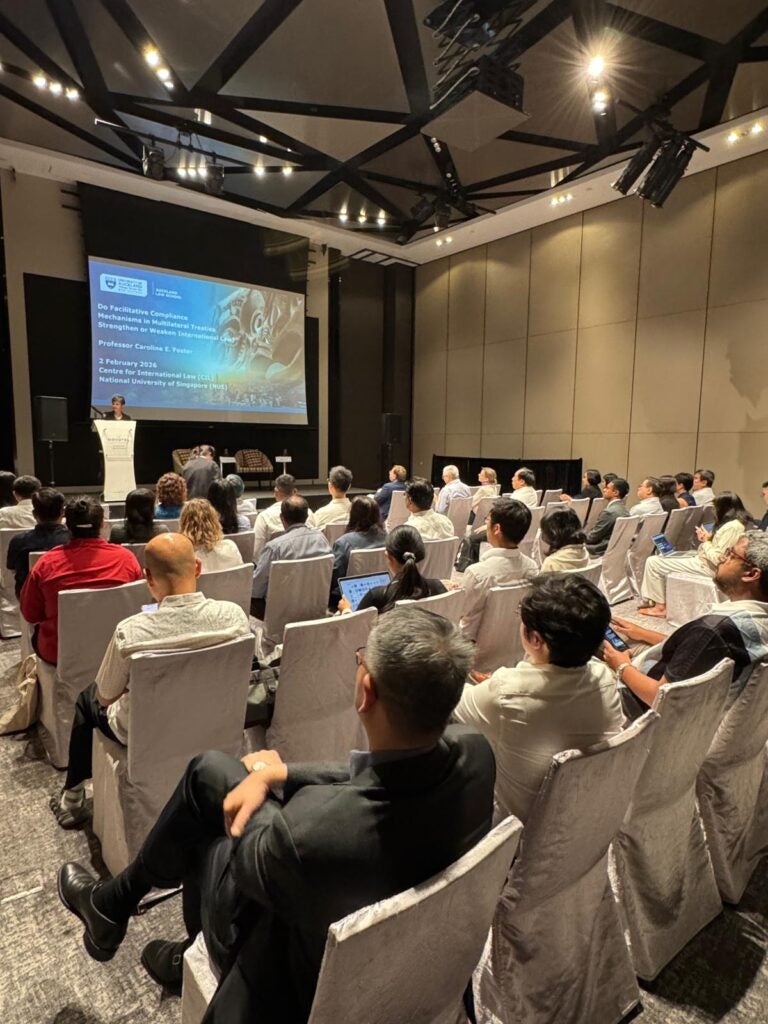
Introduction:
The theory of facilitative compliance is attractive. And in practice the idea that we can address non-compliance issues by assisting treaty parties in a dialogical and hands-on way to deal with technical, financial and political constraints has proved valuable. Yet until recently facilitative compliance has often been accompanied by the potential to impose penalising measures. We see this in the ozone treaty regime and the treaty regime for international trade in endangered species. What is new is that today we have 'new generation' facilitative compliance schemes characterised by the absence of such enforcement powers, as seen under the Paris Agreement where the Implementation and Compliance Committee is a purely facilitative, non-punitive body. The turn to purely facilitative compliance mechanisms has advantages. This may reduce States' legal concerns about the overlap between non-compliance procedures and international dispute settlement, and their concerns about the emergence of subsystems of state responsibility. It may also protect States seeking and receiving assistance from feeling politically or legally exposed to charges that they have broken international law, and enable them to be more forthcoming about addressing problems.
But is there more than meets the eye to this socially progressive and legally tidy phenomenon of facilitative compliance? By removing the clear line between compliance and non-compliance that we are used to as part of our concept of law, does facilitative compliance weaken the rule of law? Further, the new treaties in which facilitative compliance is adopted also seem to have certain characteristics. Concluding a new treaty is an achievement to be celebrated in today's political environment. Inclusion of compliance machinery should certainly be welcomed. However the characteristic shared by the new high seas biodiversity treaty, the new pandemic treaty and indeed the Paris Agreement of 2015, is that in many ways these treaties all hold back from imposing substantive obligations on parties. Instead, they largely impose procedural obligations, including a great many reporting obligations, to which their facilitative compliance machinery then applies.
The explanation of this apparent weakening or under-utilisation of international law seems to lie in the role that international law is being called upon to play in an increasingly interdependent world, where the concerns of each State are woven in with the concerns of others at an unprecedented level of complexity. International law and domestic legal systems are more intertwined than ever before, with international law making increasingly fine-grained regulatory demands of governments. The proceduralisation of international law and the adoption of more purely facilitative compliance mechanisms is a response that seems to edge us forward toward meeting our ultimate common goals while enabling States to retain as much sovereign political decision making power as they can.
About the speaker:
Professor Dr. Caroline Foster is Director at the New Zealand Centre for Environmental Law at the University of Auckland, New Zealand, and an experienced teacher of public law, international law, international economic regulation, international environmental law, law of the sea and Antarctica, and international dispute settlement. Presently she is co-leading an international research project on food, trade and sustainability and is a member of a team addressing the ways in which climate change is testing international law.
Professor Foster’s monograph “Global Regulatory Standards in Environmental and Health Disputes: Regulatory Coherence, Due Regard and Due Diligence” (Oxford University Press, 2021) was supported by a grant from the Marsden Council of the Royal Society of New Zealand, and nominated for the European Society of International Law Monograph Prize. Her most recently published research includes work analysing states' obligations of due regard for the interests of future generations as relevant in international courts’ advisory opinions [2024] TEL; and on how international trade law can respond to environmental imperatives; as well as an edited book comparing non-compliance mechanisms in diverse areas of international law with Professor Christina Voigt at the University of Oslo (Cambridge University Press, 2024).
Professor Foster is a New Zealander with British citizenship, and speaks French and Spanish as acquired languages. She was a legal and policy adviser at the New Zealand Ministry of Foreign Affairs and Trade 1992 to 1999, graduating from the Andres Bello Chilean Diplomatic Academy as a foreign diplomat. She worked on UN matters including the ILC agenda, the Kyoto Protocol and the Cartagena Biosafety Protocol, and as a New Zealand representative at international negotiations in a number of different areas of international law, including air services.
She published her prior monograph with Cambridge University Press in 2011, "Science, Proof and Precaution in International Courts and Tribunals: Expert Evidence, Burden of Proof and Finality", cited by Judges Simma and Al-Khasawneh in the International Court of Justice in Pulp Mills (Argentina v Uruquay) and by counsel in Whaling in the Antarctic (Australia v Japan).
About the moderator:
 Ms Diane Tan was appointed Deputy Director-General (Security) of the International Affairs Division (IAD) of the Attorney-General’s Chambers of Singapore (AGC) with effect from 1 July 2022. As DDG (Security), Diane oversees International Criminal Law and International Legal Criminal Cooperation, Security Proliferation, Diplomatic Law, International Human Rights Law, International Environmental Law, the Law of the Sea, and Aviation workstreams in IAD. In 2021, she was appointed as Singapore’s Alternate Member to the Committee to facilitate implementation and promote compliance under the Paris Agreement (PAICC). She was re-appointed as Singapore’s Member of PAICC in 2023.
SILE Accredited CPD Activity:
 1.0 Public CPD Point
Practice Area: International Law
Training Category: General
Participants who wish to obtain CPD Points are reminded that they must comply strictly with the Attendance Policy set out in the CPD Guidelines. For this activity, this includes signing in on arrival and signing out at the conclusion of the activity in the manner required by the organiser, and not being absent from the entire activity for more than 15 minutes. Participants who do not comply with the Attendance Policy will not be able to obtain CPD Points for attending the activity. Please refer to http://www.sileCPDcentre.sg for more information.
Registration (Registration closed on 30 Jan 2026, 12 noon)
Sorry. This form is no longer available.