
About the Lecture:
The International Convention for the Prevention of Pollution from Ships (MARPOL) is easily the most important instrument for the prevention of operational and accidental vessel-source pollution and is widely regarded as successful. Today, the convention and its annexes have between 100-160 State parties that account for between 96-99% of global tonnage. And yet MARPOL did not have an easy start.
MARPOL was adopted in 1973 in the wake of the 1972 Stockholm Conference on the Human Environment and growing concerns from vessel-source pollution, and to improve upon an earlier instrument on oil pollution. Despite its importance, MARPOL did not enter into force easily. Tanker casualties in the 1970s highlighted the urgency to tighten standards and operationalize MARPOL. A 1978 protocol amended it before entry into force. Eventually the convention and Annex I entered into force in 1983. Since then, MARPOL has had new annexes, been amended numerous times, including through a novel tacit acceptance procedure, and accompanied by subsidiary codes and other instruments.
Today, MARPOL is a comprehensive and dynamic system for the prevention and management of oil, hazardous noxious substances, sewage, garbage and air pollution from ships through enhanced design, construction, equipment and operations standards. It includes an elaborate system of special marine areas where vessel-source pollution standards are even higher than the norm.
As MARPOL continues to evolve as a regulatory system, it is embracing or exploring new regulatory strategies to accompany its historically prescriptive approach, to encompass goal-based regulation based on risk assessment, and market-based measures. These developments raise interesting questions, including for: IMO’s own mandate; how maritime regulation is made, implemented and enforced; the growing role of recognized organizations; and future roles for port state control. MARPOL can be expected to continue to be dynamic and adaptive.
About the speaker:
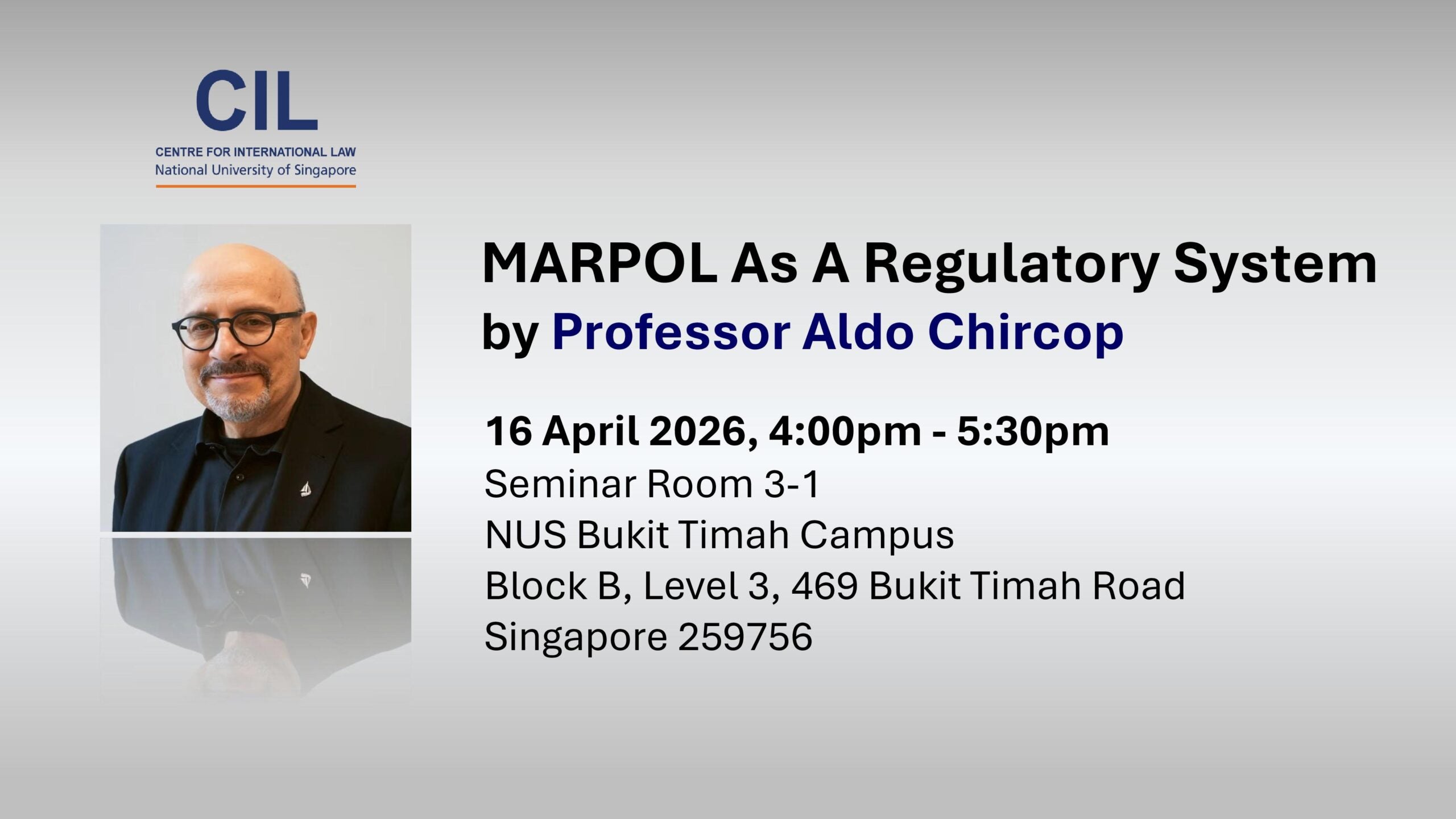
Professor Aldo Chircop (JSD) is Professor of Law at Dalhousie University. Professor Chircop's principal areas of research are in Canadian maritime law, international maritime law and international law of the sea. In particular, his maritime research focuses on the international regulation of shipping in polar regions, especially in the Arctic. He is Chair of the Comité Maritime International’s International Working Group on Polar Shipping. His previous positions included directorships of the Marine & Environmental Law Institute (MELAW), Marine Affairs Program (MAP), International Ocean Institute (IOI) and the Mediterranean Institute at the University of Malta. Dr Chircop was also Canada Research Chair in Maritime Law and Policy at Dalhousie and Canadian Chair in Marine Environment Protection at the IMO's World Maritime University in Malmö, Sweden. Professor Chircop has lectured worldwide and published extensively in Canada and overseas.
SILE ACCREDITED CPD ACTIVITY
 1.0 Public CPD Point
Practice Area: International Law
Training Category: General
Participants who wish to obtain CPD Points are reminded that they must comply strictly with the Attendance Policy set out in the CPD Guidelines. For this activity, this includes signing in on arrival and signing out at the conclusion of the activity in the manner required by the organiser, and not being absent from the entire activity for more than 15 minutes. Participants who do not comply with the Attendance Policy will not be able to obtain CPD Points for attending the activity. Please refer to http://www.sileCPDcentre.sg for more information.
REGISTRATION
"*" indicates required fields