
The Third World Ocean Assessment (WOA III) – Understanding the Ocean, Together
 Dr. Youna Lyons, Senior Global Fellow, then Visiting Associate Professor (Research), at CIL, served as Coordinating Author for Section 3: “A Global Overview of Ocean Governance” in the Third World Ocean Assessment (WOA III). In this role, she led a multidisciplinary and regionally diverse team of experts that reviewed the complex legal and institutional frameworks governing the protection of the marine environment, contributing critical expertise on the law of the sea and other applicable environmental regulations. This is the first time that the WOA includes a stand-alone analysis of the current framework for global and regional ocean governance, which is essential for addressing the collective management of a highly connected environment, including an extensive area beyond national jurisdiction. Dr. Zhen Sun, Co-Head of the Ocean Law and Policy Programme of CIL, then Associate Professor (Research/OSGM) at the World Maritime University, was a member of the writing team for Section 5A, Chapter 6: “Shipping”. The Shipping Chapter brought together the latest knowledge on sustainability aspects of maritime transport, the pressures posed by shipping on the marine environment, and the international legal and policy framework. Their work contributes to a shared and global understanding of ocean governance, and ensures that WOA III provides a rigorous and policy-relevant assessment of the current systems.
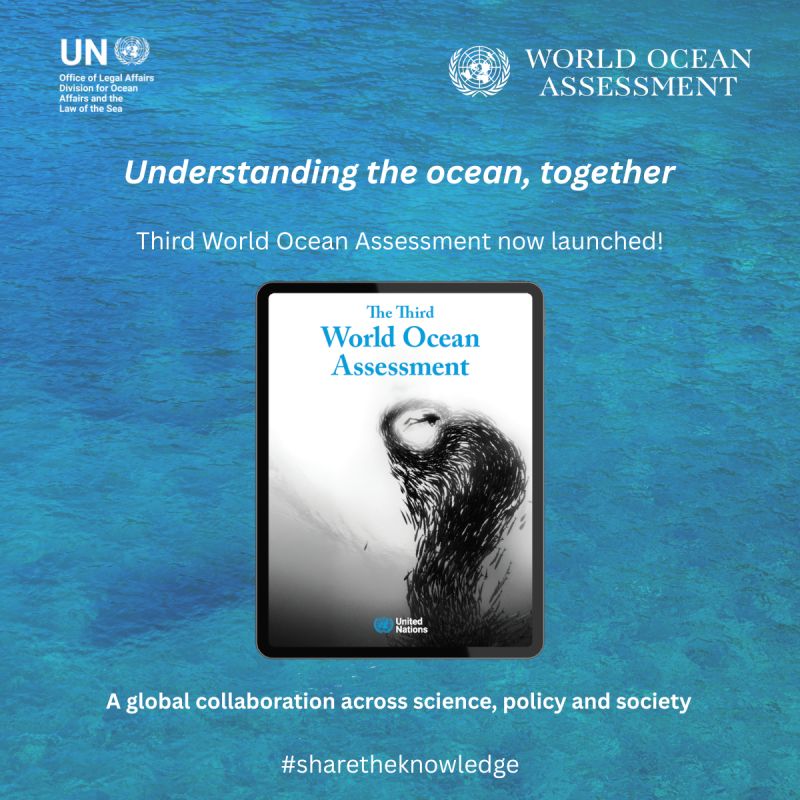
The WOA, in its third cycle, represents the most comprehensive global evaluation of the state of the ocean and its governance, conducted under the auspices of the United Nations General Assembly and the UN Regular Process for Global Reporting and Assessment of the State of the Marine Environment, including Socioeconomic Aspects. This report reflects the collective work of approximately 600 experts from 86 countries. Building on previous assessments, WOA III provides an authoritative, interdisciplinary analysis of environmental, economic, social, legal, and policy dimensions shaping ocean sustainability. Its findings are expected to inform international decision-making, support the implementation of global frameworks such as the Sustainable Development Goals, and guide States in addressing emerging challenges, including marine environmental degradation, climate change, and pressures from offshore activities. For more information on WOA III, please visit: https://www.un.org/regularprocess/woa3