Dr Jon Truby Participates as Catalyst Speaker at United Nation’s Private Sector Roundtable on AI Governance
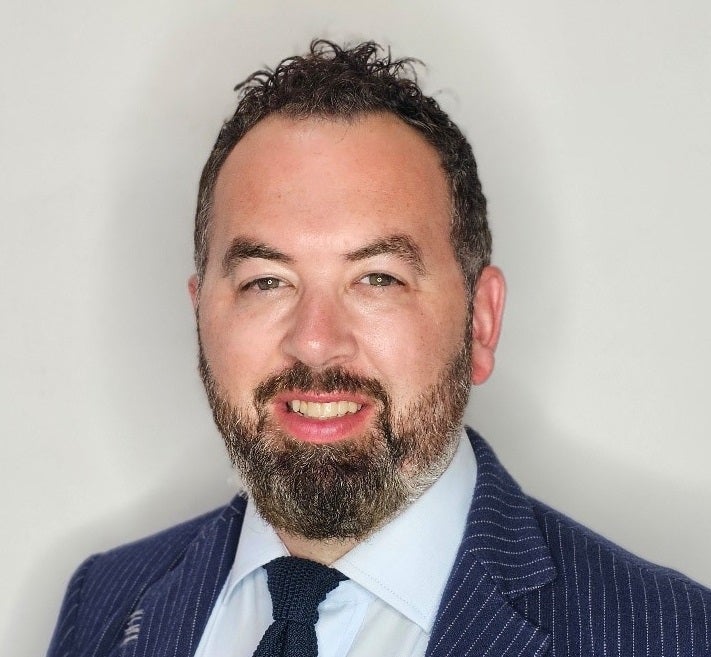
Dr Jon Truby, UNESCO Chair on AI Law & Sustainability at the Centre for International Law, National University of Singapore, participated as a catalyst speaker at the Private Sector Roundtable on AI Governance, titled ‘From Infrastructure to Trust. Shaping ASEAN’s Private AI Stack and Governance’. The roundtable was held on 8th June 2026 as a side event of the ASEAN Future Forum 2026 at the Diplomatic Academy of Viet Nam in Ha Noi.
The high-level roundtable was co-organised by the Diplomatic Academy of Viet Nam and the United Nations in Viet Nam, with support from the United Nations Office for Digital and Emerging Technologies. It brought together senior representatives from government, private sector, technology firms, academia and development partners to consider how ASEAN can shape its AI governance agenda in a manner that strengthens trust, accountability, regional cooperation and public interest outcomes.
Dr Truby contributed to Session II, ‘Governance, Accountability and Public Trust’, as a catalyst speaker for the discussion on accountability and recourse. The session considered how governance frameworks should evolve to define accountability and ensure that citizens have meaningful recourse when AI-enabled services cause harm. His intervention provided a focused legal and governance perspective on one of the central questions facing governments and private sector actors as AI systems become part of public-facing services.
Dr Truby’s contribution addressed how ASEAN can pursue AI sovereignty while avoiding digital fragmentation. He also spoke to the need for regional interoperability, cross-border trust and accountable public-private collaboration. His remarks framed AI governance not only as a compliance issue but also as a matter of public trust, institutional responsibility, sustainability and peace.
His intervention further drew attention to the role of AI diplomacy in shaping global AI governance around trust, accountability, sustainability and peace. He raised key questions on minimum AI audit and disclosure duties, accountability chains from design through remedy and independent review, peace-oriented governance to reduce disinformation and escalation, sustainability disclosures in public-interest AI procurement and the metrics needed to assess whether AI systems remain trustworthy and resource-responsible over time.
The roundtable included representatives from major technology and private sector actors including Google, Meta, Momo, GreenNode, FPT Corporation, Aionix Data, Indera Agri and Trung Nguyen Legend Group. It also included participants from the Vietnam National Innovation Center, the Ministry of Science and Technology of Viet Nam, the Singapore Embassy in Ha Noi, the Ministry of Digital Development and Communications of Myanmar, Malaysia’s Ministry of Digital, the National AI Office of Malaysia and Konrad-Adenauer-Stiftung Viet Nam.
Through Dr Truby’s participation, CIL contributed a substantive academic and legal perspective to a discussion with direct relevance for ASEAN’s digital future. His role as catalyst speaker helped frame the accountability and recourse debate in terms of legal responsibility, public trust and institutional remedy, while connecting ASEAN’s regional choices to wider global AI governance discussions.
The roundtable aimed to generate grounded regional positions on AI governance, strengthen public-private architecture for AI governance in the region and carry ASEAN perspectives into the first Global Policy Dialogue on AI Governance in Geneva in July 2026. CIL is pleased to contribute to this important process through the work of the UNESCO Chair on AI Law & Sustainability.