
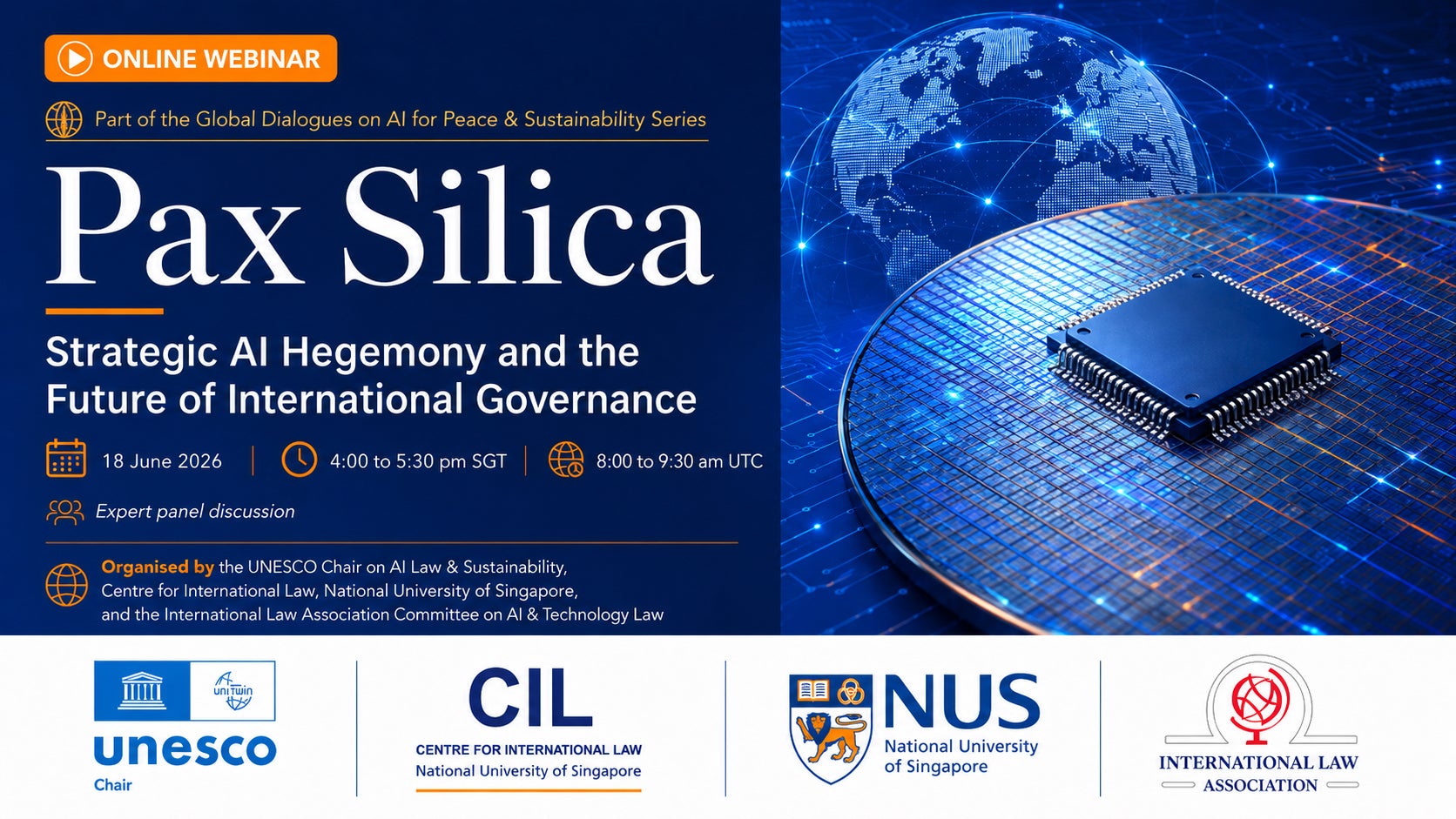
Part of the UNESCO Chair on AI Law & Sustainability’s “Global Dialogues on AI for Peace & Sustainability Series”
Organised by the UNESCO Chair on AI Law & Sustainability, Centre for International Law, National University of Singapore and the International Law Association Committee on AI & Technology Law
Overview
Who controls the silicon controls the future. That is the logic underlying Pax Silica, the U.S. Department of State's flagship initiative on AI and supply-chain security, launched at the Pax Silica Summit in Washington, D.C. in December 2025. Partner nations signed the Pax Silica Declaration, committing to cooperation on silicon, critical minerals, semiconductors, advanced computing, logistics, and energy infrastructure. The initiative is framed as an effort to build economic security consensus among trusted allies. But what does it mean for everyone else?
This webinar takes Pax Silica as a case study in the rapidly evolving relationship between AI infrastructure, strategic competition, and international governance. It asks what happens when the foundational technologies of the AI era, chips, compute, data infrastructure, and critical minerals, become instruments of geopolitical power, and whether international law and multilateral institutions are equipped to respond.
The discussion will consider whether initiatives like Pax Silica deepen cooperation among trusted partners or whether they narrow the policy space available to states outside the main AI and semiconductor alliances. It will bring legal, diplomatic, strategic, and regional perspectives to bear on a set of questions that are becoming central to the future of international order.
Key Questions
- What does Pax Silica indicate about the relationship between AI, semiconductors and strategic power?
- How should international law respond to the growing importance of compute, chips, critical minerals and data infrastructure?
- Does Pax Silica point towards deeper cooperation among trusted partners or a more divided system of AI governance?
- What are the implications for trade law, export controls, investment screening and technology transfer?
- How may Pax Silica affect Asia, ASEAN and the wider Global South?
- What role can UNESCO, international legal bodies and other multilateral institutions play in keeping AI governance open and fair?
Speakers
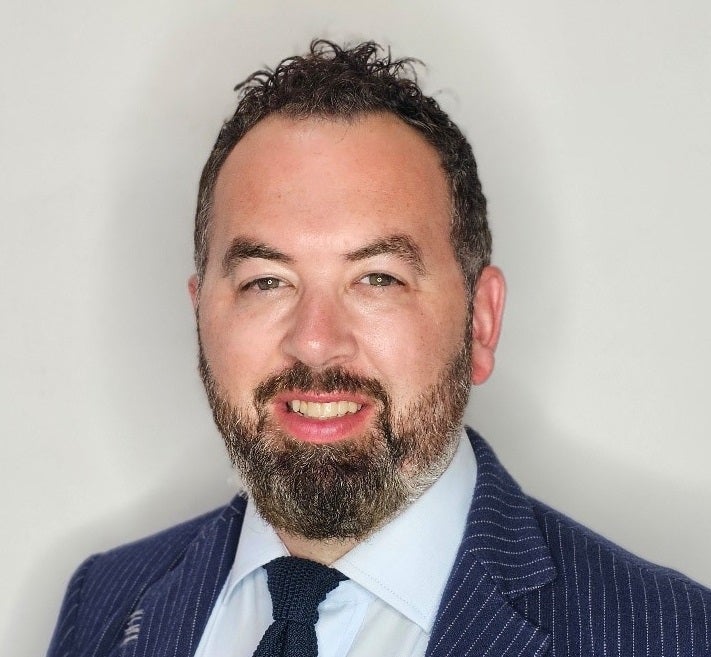
Dr. Jon Truby (Chair) | UNESCO Chair in Artificial Intelligence Law & Sustainability | Centre for International Law, National University of Singapore
Dr. Jon Truby is UNESCO Chair in Artificial Intelligence Law and Sustainability at the Centre for International Law, National University of Singapore, where he also serves as Visiting Research Associate Professor. He is Chair of the International Law Association's Committee on Artificial Intelligence and Technology Law. His work focuses on AI governance, sustainability, and public international law, with recent contributions on AI and climate, international standards, and law and technology.
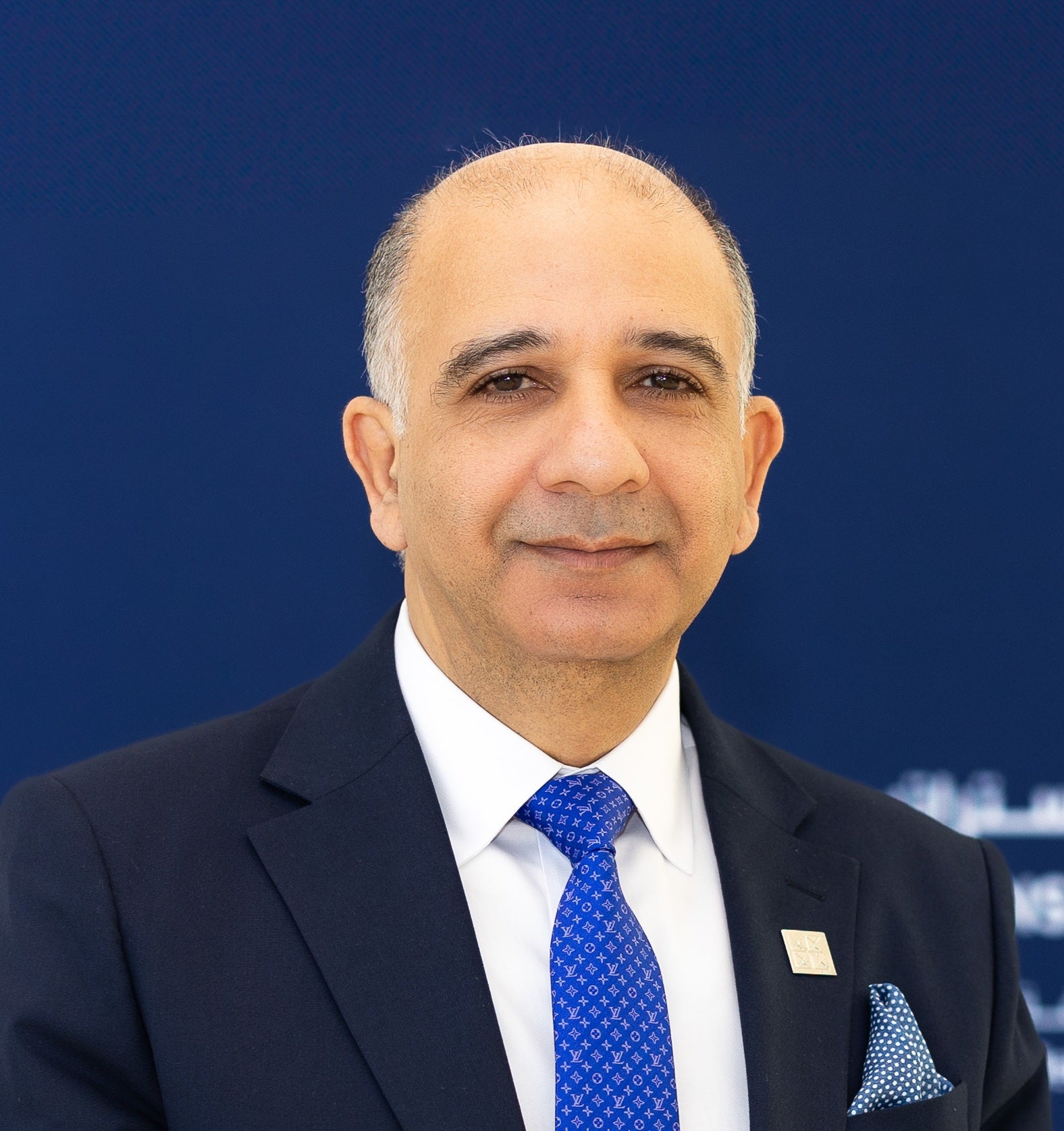
Ambassador Mohamed Ali Chihi | Executive Director, Global Institute for Strategic Research (GISR)
Ambassador Chihi is a career diplomat and Executive Director of the Global Institute for Strategic Research. He previously served as Tunisia's Ambassador to France, Russia, Armenia, Belarus, Turkmenistan, and Kazakhstan, and held senior positions at Tunisia's Ministry of Foreign Affairs including General Secretary and General Director of Consular Affairs. Prior to joining GISR, he was Professor of International Economic Relations at the Ecole Nationale d'Administration, Tunisia.
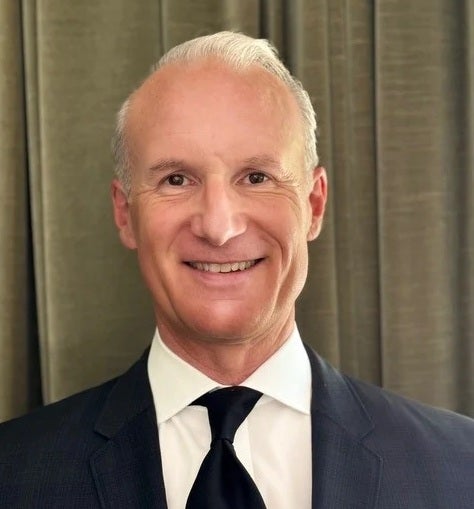
Professor Sean Watts | Constitutional & Military Law Chair, Department of Law | United States Military Academy at West Point | Co-Director, Lieber Institute for Law and Warfare
Professor Sean Watts holds the Constitutional and Military Law Chair at the Department of Law at the United States Military Academy at West Point, where he co-directs the Lieber Institute for Law and Warfare. He is co-General Editor of the Oxford University Press book series Lieber Studies and Co-Editor-in-Chief of the electronic publication Articles of War. He currently co-directs the Lieber Institute's international drafting project, the West Point Manual on International Law Applicable to Artificial Intelligence in War.
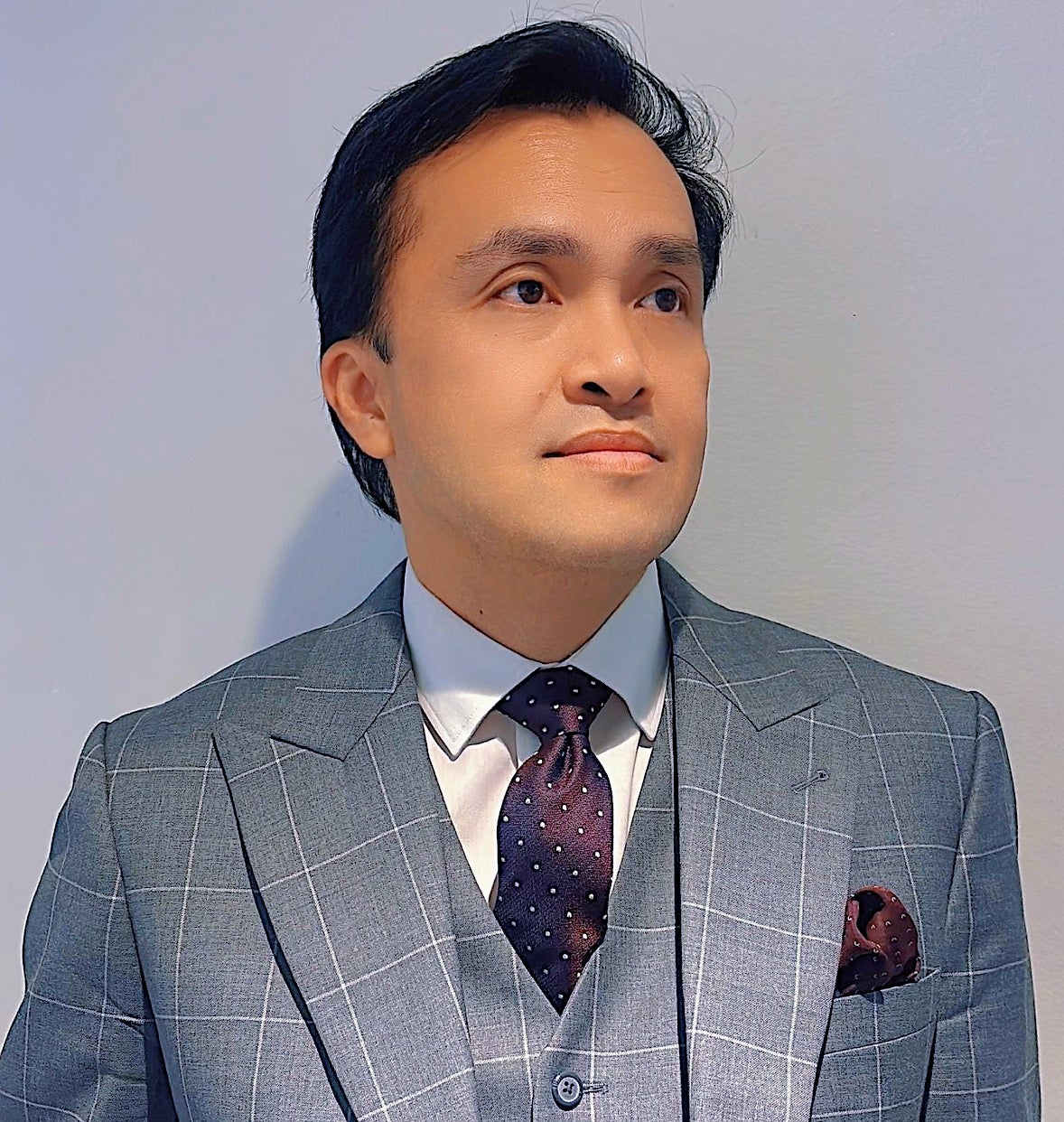
Dr. Rafael Dean Brown | Clinical Associate Professor | Qatar University College of Law | Co-Rapporteur, ILA Committee on AI & Technology Law
Dr. Rafael Dean Brown is a Clinical Associate Professor at Qatar University College of Law, where he researches AI law and regulation, with publications on AI personhood and regulatory sandboxes. His scholarship has influenced policy in the EU, US, and UK. In 2025, he was appointed Co-Rapporteur of the International Law Association's Committee on AI and Technology Law, contributing to international discussions on law and technology. He also serves as an ambassador for Digital Learning and Online Education.
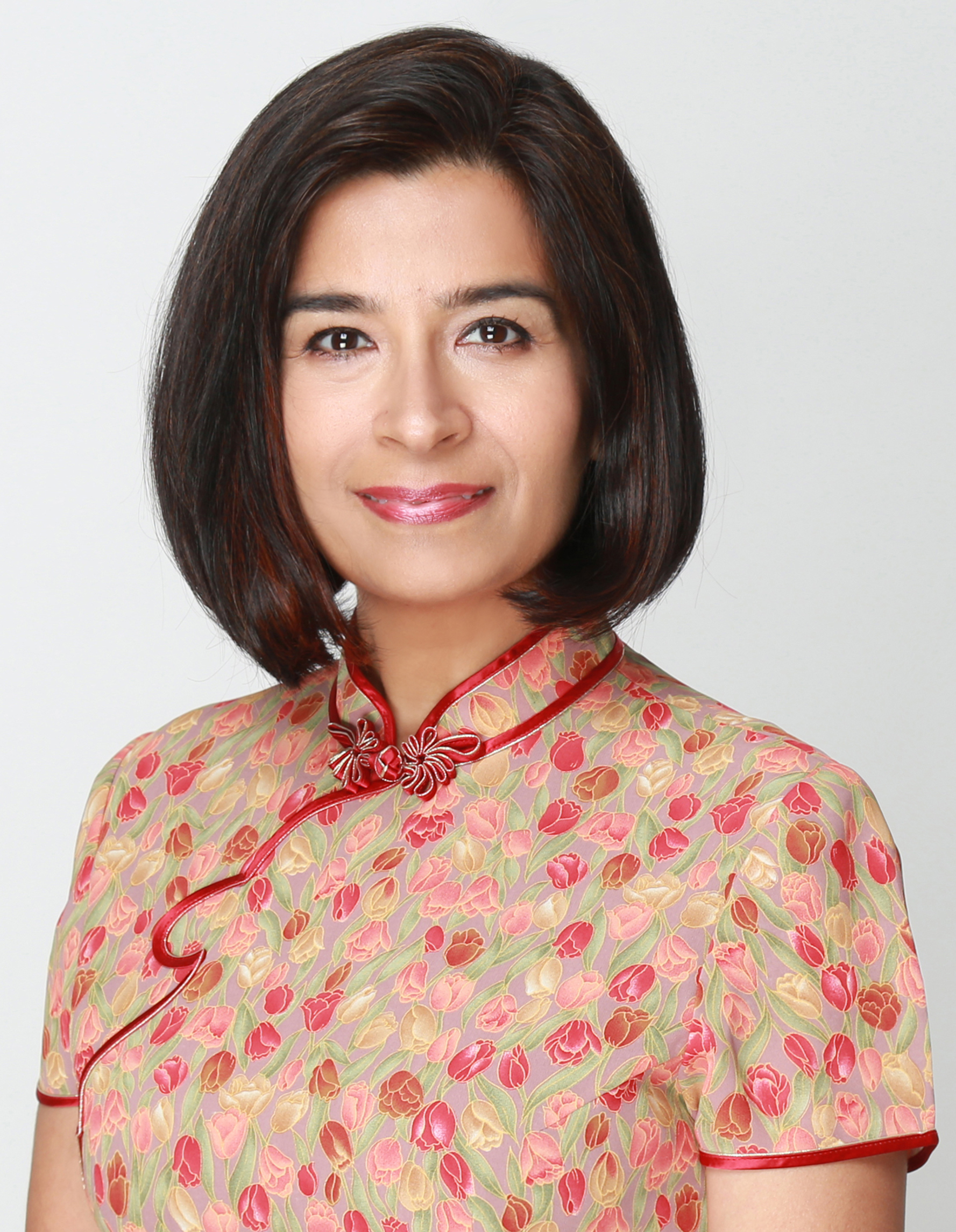
Ms. Asha Hemrajani | Senior Fellow, S. Rajaratnam School of International Studies (RSIS), Nanyang Technological University
Ms. Asha Hemrajani is a Senior Fellow at the S. Rajaratnam School of International Studies, Nanyang Technological University. Her research focuses on AI safety and security, cybersecurity policy and law, digital infrastructure, and Critical Information Infrastructure. Her commentary has been featured in Bloomberg, The Business Times, ChannelNewsAsia, The Diplomat, and the Lowy Institute's The Interpreter, among others. She previously served on the Board of Directors of the Internet Corporation for Assigned Names and Numbers (ICANN), the global domain names regulator, and holds a Bachelor's degree in Electrical Engineering and a Modular Master in Cybersecurity by Design.
Dr. Barrie Sander | Assistant Professor of International Law | Leiden University, Faculty of Governance and Global Affairs, The Netherlands
Dr. Barrie Sander is Assistant Professor of International Law at Leiden University, where he conducts research and teaches in digital technology and international law, international human rights law, international criminal law, and public international law. His current research explores how international law addresses societal risks associated with digital technologies, online platforms, and artificial intelligence, including challenges related to content moderation, data surveillance, and algorithmic governance. His latest project, Climate AI Rights (Project CLAIR), examines rights-based approaches for addressing the risks that arise at the intersection of AI and climate change.
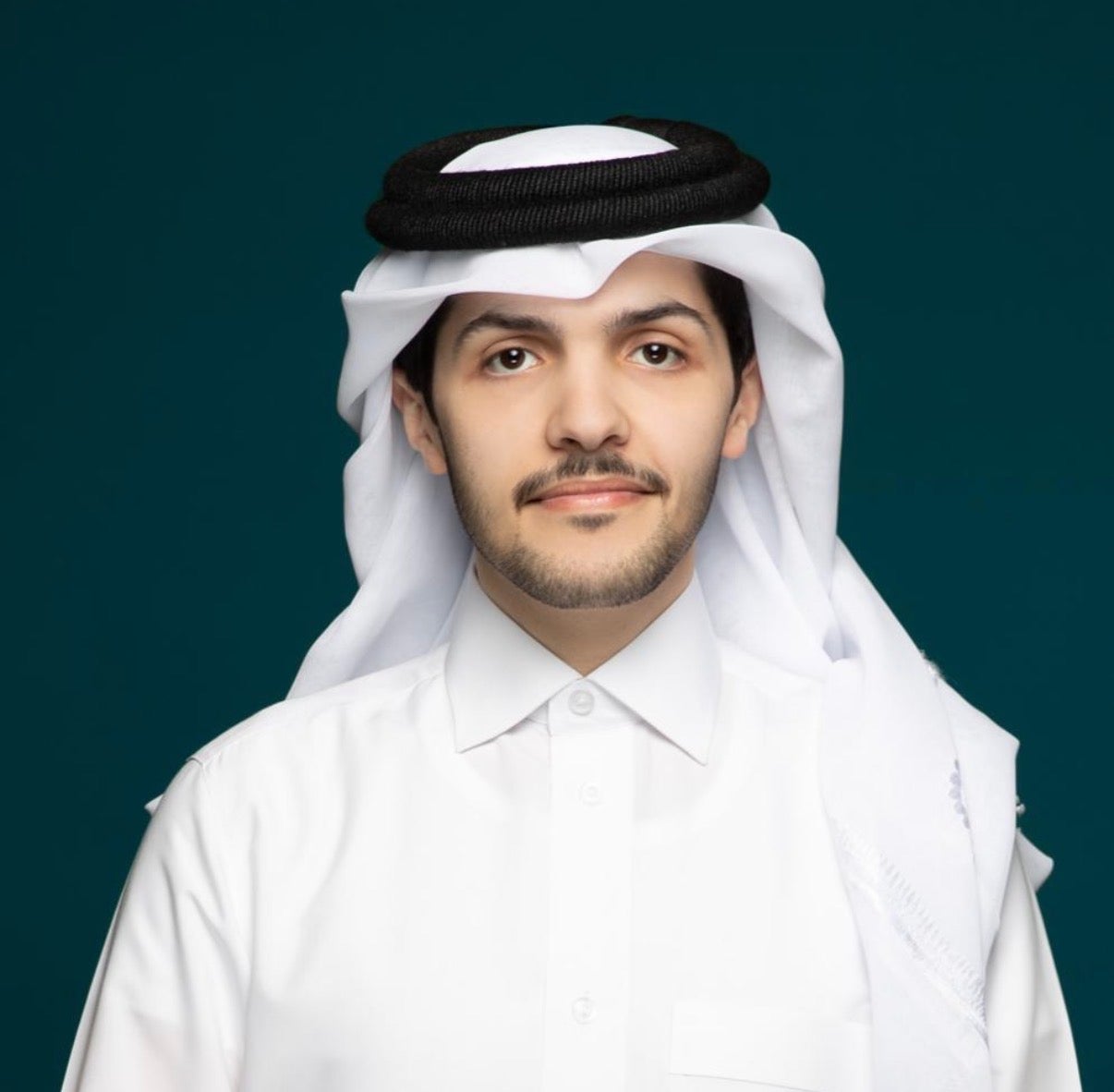
Mr. Nayef Al-Nabet | Nonresident Fellow, Middle East Council on Global Affairs | Member, ILA Committee on AI & Technology Law
Nayef Al-Nabet is a researcher focusing on artificial intelligence governance, digital sovereignty, and small-state agency in emerging international governance frameworks. His work examines how states navigate technological transformation, global norm formation, and shifting geopolitical dynamics, with a particular focus on the Gulf region. He previously worked at the United Nations Department of Economic and Social Affairs (UN DESA) and is currently a Nonresident Fellow at the Middle East Council on Global Affairs. He is a member of the International Law Association Committee on AI and Technology Law.
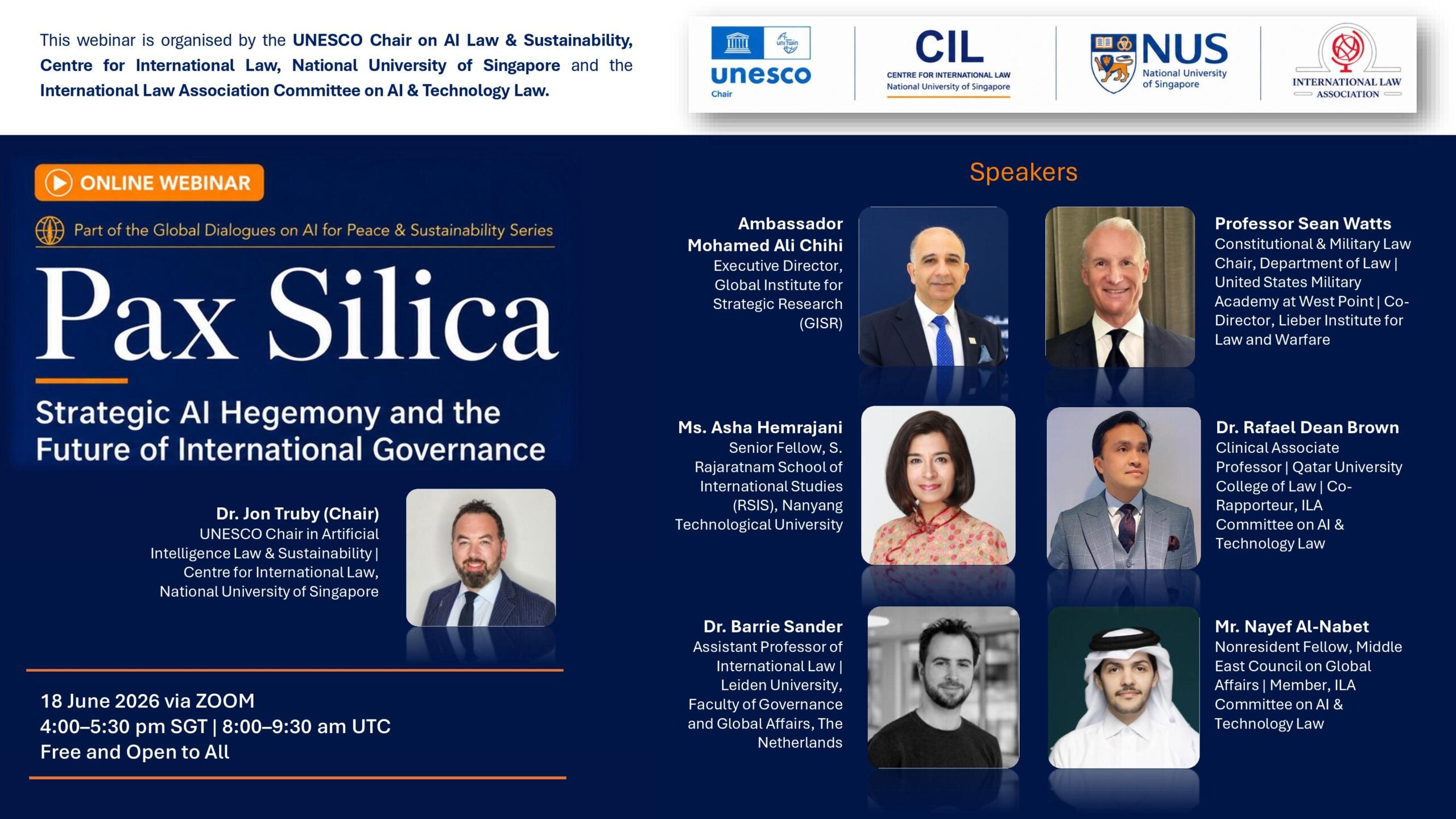
This webinar is organised by the UNESCO Chair on AI Law & Sustainability, Centre for International Law, National University of Singapore and the International Law Association Committee on AI & Technology Law.
For enquiries, please contact: Aadil: aadil.huque@nus.edu.sg (Event Coordinator for UNESCO Chair on AI Law & Sustainability, CIL NUS)
1.5 Public CPD Points
Practice Area: International Law
Training Category: General
Participants who wish to obtain CPD Points are reminded that they must comply strictly with the Attendance Policy set out in the CPD Guidelines. For this activity, this includes logging in at the start of the webinar and logging out at the conclusion of the webinar in the manner required by the organiser, and not being away from the entire activity for more than 15 minutes. Participants who do not comply with the Attendance Policy will not be able to obtain CPD Points for attending the activity. Please refer to http://www.sileCPDcentre.sg for more information.
For More Information
The UNESCO Chair on AI Law & Sustainability at the Centre for International Law, National University of Singapore, welcomes enquiries from researchers, institutions, and policymakers across ASEAN and beyond. Connect with the Chair's work through the following channels:
Main WebsiteFull details on the Chair's research agenda, events, publications, and the ASEAN Lecture Series are available at the Centre for International Law website. |
ASEAN Series PageAccess the dedicated ASEAN Networking Series page for event reports, upcoming lectures, and information on the Junior ASEAN Scholars Scheme. |
|
Follow the UNESCO Chair on LinkedIn for news, updates, and engagement with the global AI governance and sustainability research community. |
Follow the UNESCO Chair on Instagram for event highlights, research updates, and engagement with the global AI governance community. |