
UNESCO Chair on Artificial Intelligence Law and Sustainability at National University of Singapore Centre for International Law
Advancing AI governance that supports sustainability and the UN Sustainable Development Goals
Approved under UNESCO’s UNITWIN/UNESCO Chairs Programme, the UNESCO Chair on Artificial Intelligence Law and Sustainability advances global understanding and governance of artificial intelligence within the context of sustainable development. The Chair recognises AI’s dual role as a driver of innovation and a potential challenge to environmental, social and legal systems internationally. Its work strengthens thought leadership in international legal governance, helping to balance technological progress with sustainability.
About the Chair
The Chair is hosted by the Centre for International Law at the National University of Singapore in Singapore. The Chairholder is Dr Jon Mark Truby, Visiting Research Associate Professor in Artificial Intelligence and Technology Law.
Positioned in a major regional hub for policy, research, and innovation, the Chair supports international cooperation and practical solutions that are globally relevant and regionally responsive.
What the Chair Focuses on:
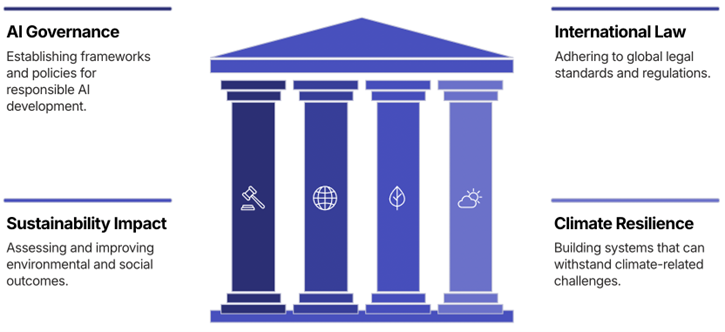
The Chair’s work is structured around three interconnected pillars:
What the Chair delivers
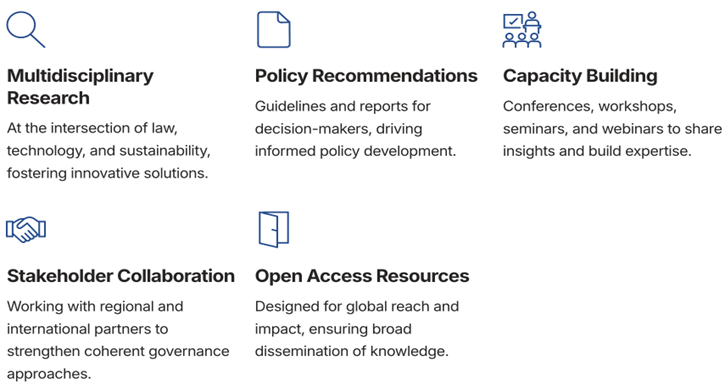
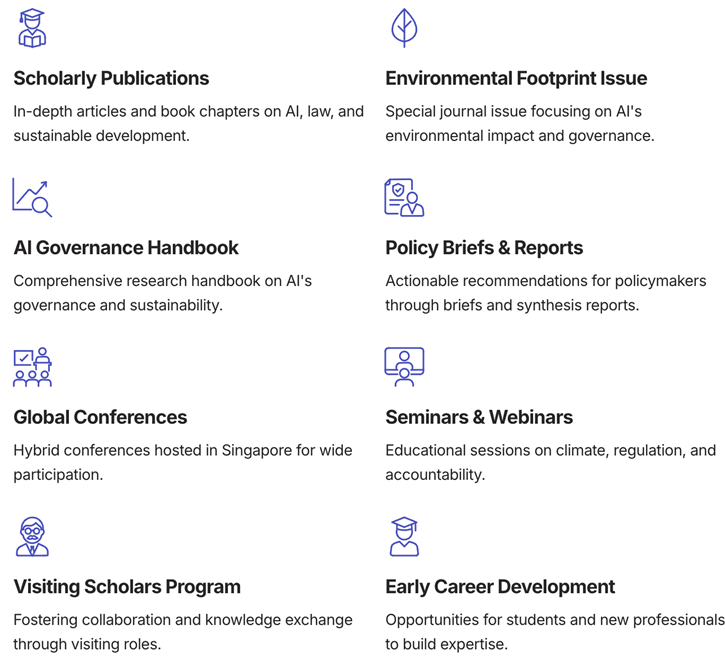
The Chair produces practical, policy-relevant outputs and convenes cross-sector dialogue through:
Planned outputs over four years:
Across the program period, the Chair will deliver a set of flagship outputs and activities, including:
Who Benefits?
The Chairʼs work supports policymakers, international organisations, academics, researchers, industry leaders and civil society organisations working on AI governance and sustainability. Activities and outputs are designed to be especially useful for stakeholders in Asia and the Global South, supporting more inclusive participation in global AI governance and improved access to practical knowledge resources.
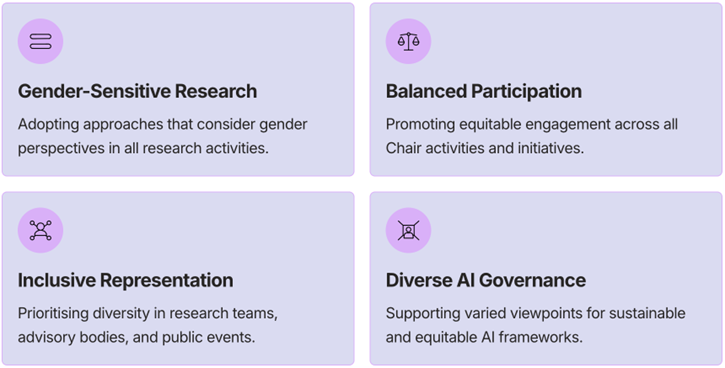
Values and Inclusion
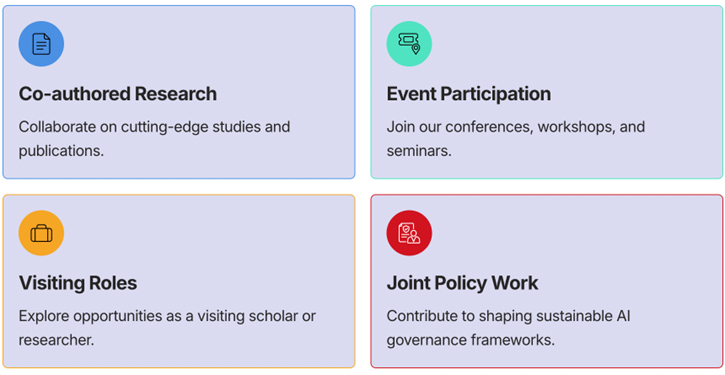
Get Involved
The Chair welcomes collaboration with universities, research centers, international organisations, governments, and industry partners.
Hosted by


UNESCO Chair on AI Law & Sustainability ASEAN SERIES
Centre for International Law (CIL) | National University of Singapore
Supported by the ILA AI & Technology Law Committee
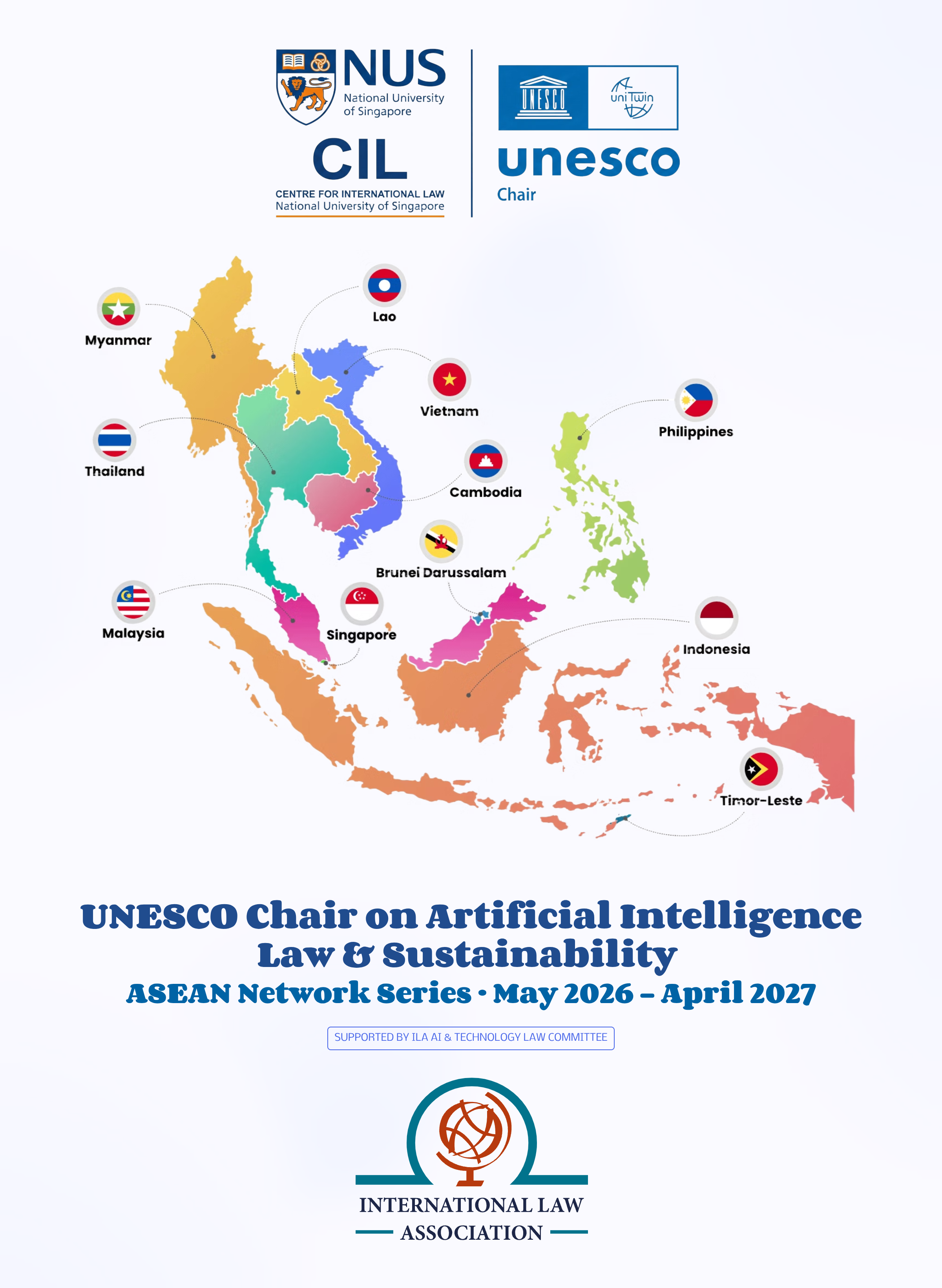
ASEAN Network Series
The UNESCO Chair on AI Law & Sustainability ASEAN Network Series is a flagship initiative of the Chair at CIL NUS, running from May 2026 to April 2027 and supported by the ILA AI & Technology Law Committee. The Series brings rigorous AI law and governance scholarship directly to universities and research institutions across ASEAN member states, advancing inclusive and policy-relevant legal education throughout the region.
About the Series
Each event in the Series is structured around three programme segments and a networking session.
- Part 1- Core programme session on AI law, governance and sustainable development frameworks, led by Dr. Jon Truby and two or more researchers with a moderator.
- Part 2- Junior ASEAN Researchers Scheme information session: a 15-minute overview presentation followed by a 15-minute Q&A for prospective applicants.
- Networking - CIL-sponsored lunch or high tea for all attendees.
Programme Goals
The Series is designed to build lasting regional capacity in AI law and governance across ASEAN and the Global South. It is fully aligned with SDG 4 (Quality Education) and SDG 17 (Partnerships for the Goals).
The programme is committed to Global South representation, the inclusion of women scholars and researchers, and dedicated pathways for early-career academics through the Junior ASEAN Researcher Scheme and fellowship opportunities.
Host Institution Eligibility
To host a Series event, institutions must meet the following criteria.
- ASEAN-based university or accredited research institution
- Active faculty working in AI, law or sustainability fields
- Venue space suitable for a seminar or panel discussion
- Ability to provide two or more qualified co-panellists from the institution
- Commitment to co-disseminate outcomes and event materials
This series is fully funded by CIL. No financial contribution is required from host institutions.
For further details please refer to the brochure.
Upcoming Event: Cambodia
Artificial Intelligence and Law in Cambodia and the ASEAN
Date: 29 June 2026
Time: 6:00 PM - 8:30 PM
Venue: Hall G, Royal University of Law and Economics, Cambodia
Organised in collaboration with the Royal University of Law & Economics and the Cambodia Academy of Digital Technology, the event will examine AI regulation, governance and sectoral implications across Cambodia and the ASEAN region.
Keynote by Dr Jon Truby, UNESCO Chair on AI Law & Sustainability, CIL, NUS. The programme will also include Sheikh Sultan Aadil Huque from CIL as a panelist.
Contact & Enquiries
To collaborate or host an event, contact Aadil Huque: aadil.huque@nus.edu.sg
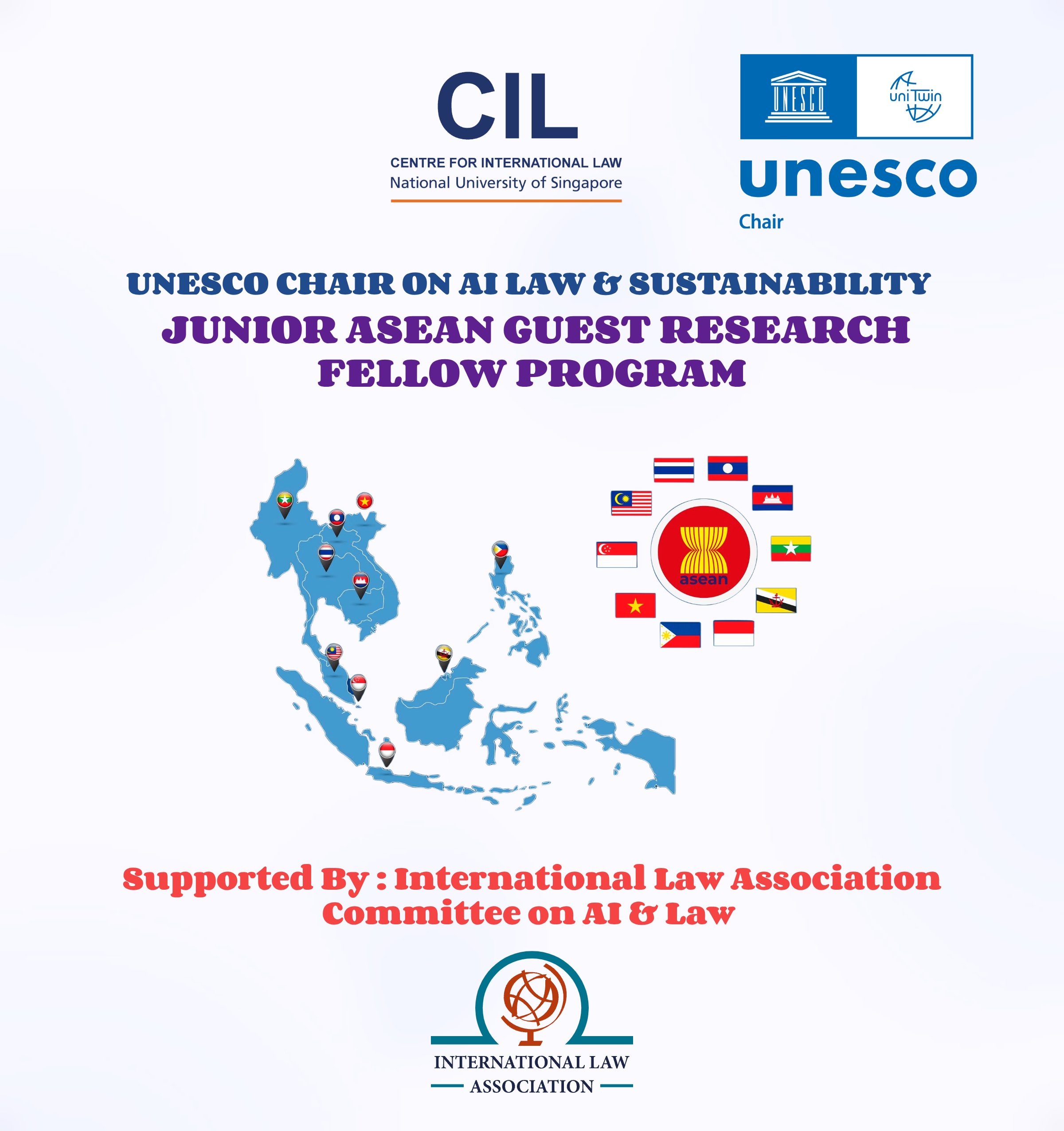
The Junior ASEAN Guest Research Fellow Programme is a competitive, fully funded one-month in-residence fellowship offered by the UNESCO Chair on AI Law & Sustainability at CIL NUS. The programme invites outstanding early-career legal scholars from across ASEAN to collaborate directly with the Chair's team on cutting-edge research at the intersection of artificial intelligence, law and sustainability.
This fellowship is fully funded by the Centre for International Law (CIL), NUS. No financial contribution is required from fellows or their home institutions.
Programme Highlights
- Fully funded one-month residency at CIL NUS, Singapore
- Direct mentorship by Jon Truby and the CIL research team
- Full access to CIL's library, legal databases and research infrastructure
- Co-authorship and co-publication opportunities on CIL research outputs
- Integration into the broader ASEAN academic network and alumni community
- Attendance at curated seminars, workshops and ASEAN Network Series events
Fellowship Coverage
All costs are covered in full by CIL NUS.
- Return Airfare Economy return flights from the fellow's home country to Singapore
- Accommodation Full one-month accommodation in Singapore arranged and funded by CIL NUS
- Monthly Stipend Living allowance covering daily and incidental expenses throughout the residency
- Research Access Full access to CIL NUS library, legal databases and research infrastructure
- Dedicated Mentorship Direct mentorship from Prof. Jon Truby and the CIL research team
- Co-Authorship Collaboration and co-publication opportunities on CIL research papers and outputs
Eligibility Criteria
Citizenship (mandatory): Applicants must be a citizen of an ASEAN member state : Brunei, Cambodia, Indonesia, Laos, Malaysia, Myanmar, Philippines, Singapore, Thailand, Vietnam or Timor-Leste.
Academic Qualification (any one of the following):
- Final-year LLM or Master of Laws student at a recognised ASEAN university
- Completed LLM, Master of Laws or PhD in law from a recognised ASEAN university
- Currently enrolled in a PhD programme in law or a related field at an ASEAN university
Field of Study: Research interests or thesis topics in AI law, technology law, digital governance, AI ethics, environmental law and sustainability, or closely related interdisciplinary legal fields.
Academic Standing: Strong academic record with research output such as publications, conference papers, working papers or moot experience. Proficiency in English is required. A letter of support from an academic supervisor or head of department is mandatory.
Fellowship Timeline
- Week 1 Orientation and Induction — meet the UNESCO Chair team, finalise a personalised research plan and settle into Singapore.
- Weeks 2 and 3 Active Research — deep collaboration, curated seminars and workshops, peer exchange and engagement with the ASEAN Network Series.
- Week 4 Output and Presentation — prepare research outputs, deliver fellow presentations and participate in the closing roundtable discussion.
- Post-Fellowship Alumni Engagement — co-publication opportunities, sustained ASEAN Series involvement and lifelong membership in the CIL alumni network.
Selection Criteria
- Research Relevance — quality and alignment of the research interest with AI law, technology governance, digital regulation or sustainability, and its potential to contribute to the Chair's ongoing agenda.
- Academic Merit — excellence in academic record, evidence of scholarly engagement, publications, conference contributions, working papers or equivalent research outputs.
- Regional Diversity — priority is given to candidates from underrepresented ASEAN countries, women researchers and first-generation scholars, reflecting UNESCO's commitment to inclusive knowledge-building.
How to Apply
Applications are reviewed on a rolling basis. Early submission is strongly encouraged. All materials must be submitted in English.
- Research Statement — a 500-word statement outlining research interest and its alignment with the UNESCO Chair's agenda on AI law and sustainability, and the preferred month for fellowship in 2026/2027.
- Letter of Support — from the applicant's academic supervisor or head of department at the home institution, confirming standing and endorsing the application.
- Academic CV and Outputs — academic CV along with a list of publications, working papers, conference contributions or other research outputs.
- Submit — email the complete application package to Aadil Huque at aadil.huque@nus.edu.sg. Incomplete applications will not be considered.
Application Deadline: 30 June 2026. Early applications are strongly encouraged as places are limited.
For more details, please refer to the brochure.
Contact & Apply
Applications and enquiries: Aadil Huque — aadil.huque@nus.edu.sg
Follow on LinkedIn: linkedin.com/company/unesco-chair-on-artificial-intelligence-law-sustainability