

Remembering Peace in a Time of War: Why International Law Matters More Than Ever | Brokering Peace
Peace Through Law: A Tale of Two Courts
by Yang Wenlan & Celine Lange
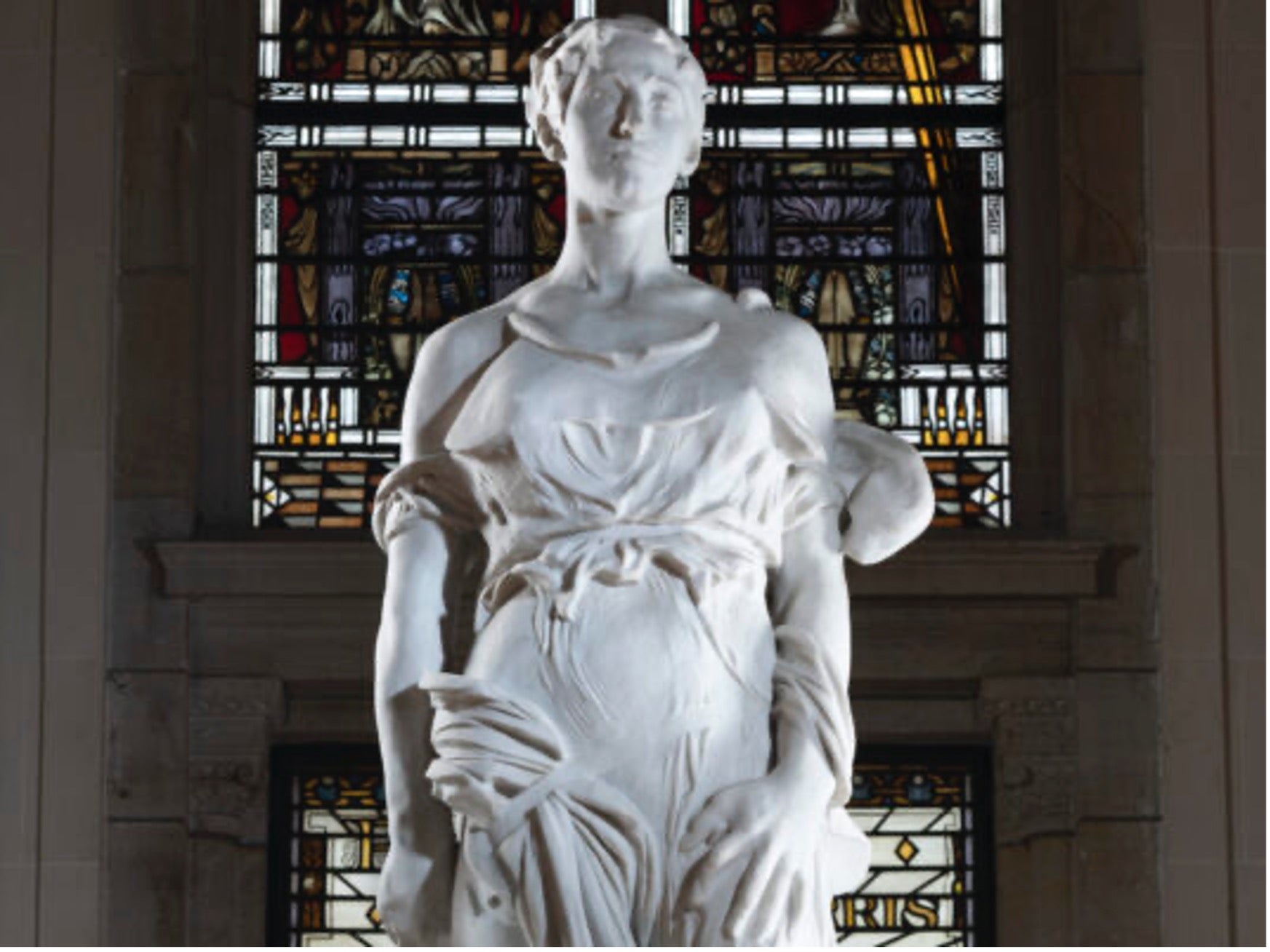
The Permanent Court of Arbitration (PCA) and the International Court of Justice (ICJ)—thereafter “the courts”—are widely viewed as symbols of peace and justice. Since their establishment, both courts have handled complex and sensitive disputes concerning peace and security and contributed to the development of jurisprudence. Since the Corfu Channel case in 1949, the ICJ has, for instance, clarified principles involving peace and security matters. As the courts’ dockets have significantly grown over the years, more conflict-related disputes have come to the Peace Palace, seeking intervention from the courts. These cases have prompted broader reflection on their role in global peace and security. While their institutional designs and juridical mandates impose constraints on their ability to adjudicate the legality of war or directly enforce peace, it is submitted that both courts, as integral parts of the peace-through-law project, have nonetheless contributed meaningfully to international peace through clarifying jurisprudence and issuing authoritative guidance to all States, and crafting creative remedies that respond to complex legal and humanitarian challenges in individual cases.
Historical Aspirations and the Affirmation of a Peace Mandate
The PCA was created through the 1899 Hague Convention, concluded at the First Hague Conference, at a time when the pacifist movement was on the rise, but war remained a legitimate method for dispute settlement. The signatory powers expressed ‘strong desire’ for ‘general peace’ (Preamble) and put together a menu of dispute settlement options for States to select before they resort to war. The menu includes good offices, mediation, commission of inquiry, and arbitration, and establishes the PCA to administer ‘all arbitration cases’ ‘at all times’. The PCA’s role was further strengthened through the 1907 Hague Convention, and through a 1937 decision to include conciliation within its scope of activities. Very early on, the PCA already administered procedures involving peace and security, such as the Dogger Bank commission of inquiry in 1904 or the conciliation between Greece and Italy in 1955. However, under the Hague Conventions, the obligation to settle disputes peacefully is only an obligation of conduct (Article 1). Moreover, access to the PCA requires additional consent, and States may carve out certain types of disputes from these procedures (e.g., Article 9).
Nevertheless, the two Hague Conferences paved the way for the creation of the League of Nations, the Permanent Court of International Justice (PCIJ), and, in the aftermath of World War II, the United Nations (UN) along with its principal judicial body, the ICJ. While access to the ICJ still depends on State consent and is subject to a multitude of carve-outs, war was banned in principle by the UN Charter with a few exceptions. The Charter not only imposes an unequivocal prohibition on ‘threat or use of force against the territorial integrity or political independence of any state’ (Article 2(4)) but also requires the peaceful settlement of disputes that are likely to endanger peace and security (Article 33). Failure to do so may trigger intervention from the Security Council, the organ charged with the ‘primary responsibility’ to safeguard international peace and security and the power to make binding decisions (Articles 24(1), 26, 33-38). While the ICJ has been criticised for being overly cautious in dealing with peace and security matters (see Separate Opinion of Judge Simma in DRC v Uganda), it has repeatedly emphasised that the Security Council does not necessarily have exclusive competence in addressing peace and security matters (see e.g., here). In the Nicaragua case, the ICJ affirmed that the Court was not precluded from addressing a matter simply because it was also before the Security Council, and that the existence of an ongoing armed conflict did not place the issue solely within the Council’s purview (pp 432-435).
In several instances, both courts successfully intervened in conflicts and prevented escalation, as seen, for example, in the ICJ Temple of Preah Vihear case in 2013, where Thailand and Cambodia accepted the Court’s decision and withdrew their forces from the contested area (see here). Despite a recent clash at another border location and Thailand’s rejection of Cambodia’s bid to refer the incident to the ICJ, both parties appear to have been respecting the Temple of Preah Vihear judgment (see here and here). A similar successful example occurred in the sovereignty and delimitation dispute between Eritrea and Yemen, in a context of hostilities in 1995. In this dispute, which was resolved by arbitration before the PCA, the parties instructed the tribunal to apply international law and ‘any other pertinent factor’ to resolve the delimitation dispute. This approach enabled the tribunal to incorporate equitable considerations and reach a settlement that was acceptable to both parties, despite their previous hostilities (here, p 281).
The mandates’ limitations and beyond
That said, these courts are also facing limits in the exercise of their judicial functions in the context of peace and security matters. Firstly, they were created ‘as an alternative to the “vicissitudes of war”’ (see Shany). The PCA and the ICJ were both designed with the expectation that disputes would be resolved through them, rather than by resorting to war, and the procedures at these courts have been mostly used for bilateral disputes with a clearly defined scope. Their capacity to address war-related matters is therefore constrained by their respective judicial mandates, jurisdictional limits and applicable laws, which are all in the control of States. From the 1899 Hague Conference where no representative harboured any ‘illusions about replacing politics with law’ (Mamolea, p 194), to the ultimate establishment of the UN, judicial organs were set up to complement—rather than replace—the political processes. Moreover, they may be put to the test when seised of ‘mega-political’ disputes, which often involve deep-rooted conflicts that extend beyond the limited facts and law presented to a tribunal in a bilateral setting. This can be seen in the mass interventions in ICJ proceedings that involve significant humanitarian causes. While these interventions may have enriched the Court’s deliberations and reasoning, they have also introduced procedural and logistical challenges to an already overburdened institution (see, e.g., here, here, and here). More significantly, critics argue that such interventions risk diluting the Court’s judicial function and authority by turning it into a political forum for expressing support for one side. This concern is underscored by the reluctance of three judges to preside over the Ukraine v Russia case due to their national State’s involvement as an intervenor, although they were not legally prohibited from doing so (see here).
Secondly, the consent-based jurisdiction limits their judicial functions. Concerning the PCA, the two Hague Conventions do not provide for compulsory arbitration. As for the ICJ, only about one third of UN Member States have accepted the Court’s compulsory jurisdiction, and among those that have, use of force or nuclear disarmament is often excluded from the ICJ’s jurisdiction (see, e.g., Germany, India, and the United Kingdom; for declarations that were later withdrawn, see the United States and France). In order to gain access to the Court, States may stretch the existing jurisdictional hooks, which could lead to unintended, or even unpleasant, results. In the high-profile Ukraine v Russia, Ukraine adopted an innovative invocation of the Genocide Convention and initially convinced the Court that it had prima facie jurisdiction to order immediate suspension of Russia’s purported ‘special military operations’. However, upon further hearing the parties, the Court ultimately found that it had no jurisdiction to adjudicate Russia’s responsibility under the Convention. While the decision is legally grounded, it also closed off the possibility for Ukraine to seek remedies in that particular proceeding, and the legal force of the provisional measures ordered in that case is called into question (see here and here).
In spite of the above, the courts have shown remarkable judiciousness in handling difficult procedural and substantive questions when conflict-related disputes come to the Peace Palace. Recent examples include assisting various States and entities resolve heatedly contested disputes through bespoke procedures (e.g., the Abyei Arbitration and Timor Sea Conciliation at the PCA), a reminder to non-disputing States on their obligations relating to arms transfer in a contentious matter (see Argüello), setting up ad hoc committees to monitor the implementation of provisional measures (see here and here), and managing mass intervention procedures in a bilateral conflict (see here).
*****
Taken together, the practice of the PCA and the ICJ reflects an enduring commitment to advancing peace through law, in keeping with their foundational mandate—even as its contours have evolved over time and did face limitations. The development by the ICJ of a substantial body of case law concerning the use of force in international law demonstrates the Court’s commitment to regulating State conduct and fostering peaceful relations among nations. The PCA, with its unique structure as an intergovernmental organisation has seen increasing reliance by the international community as a flexible and trusted forum for the peaceful resolution of disputes. These courts, however, represent only one element—alongside other mechanisms—of the broader, multifaceted peace-through-law project.