Dr. Tara Davenport and Dr. Trung Nguyen presented at the Canada – Asia Arctic Dialogue in Singapore
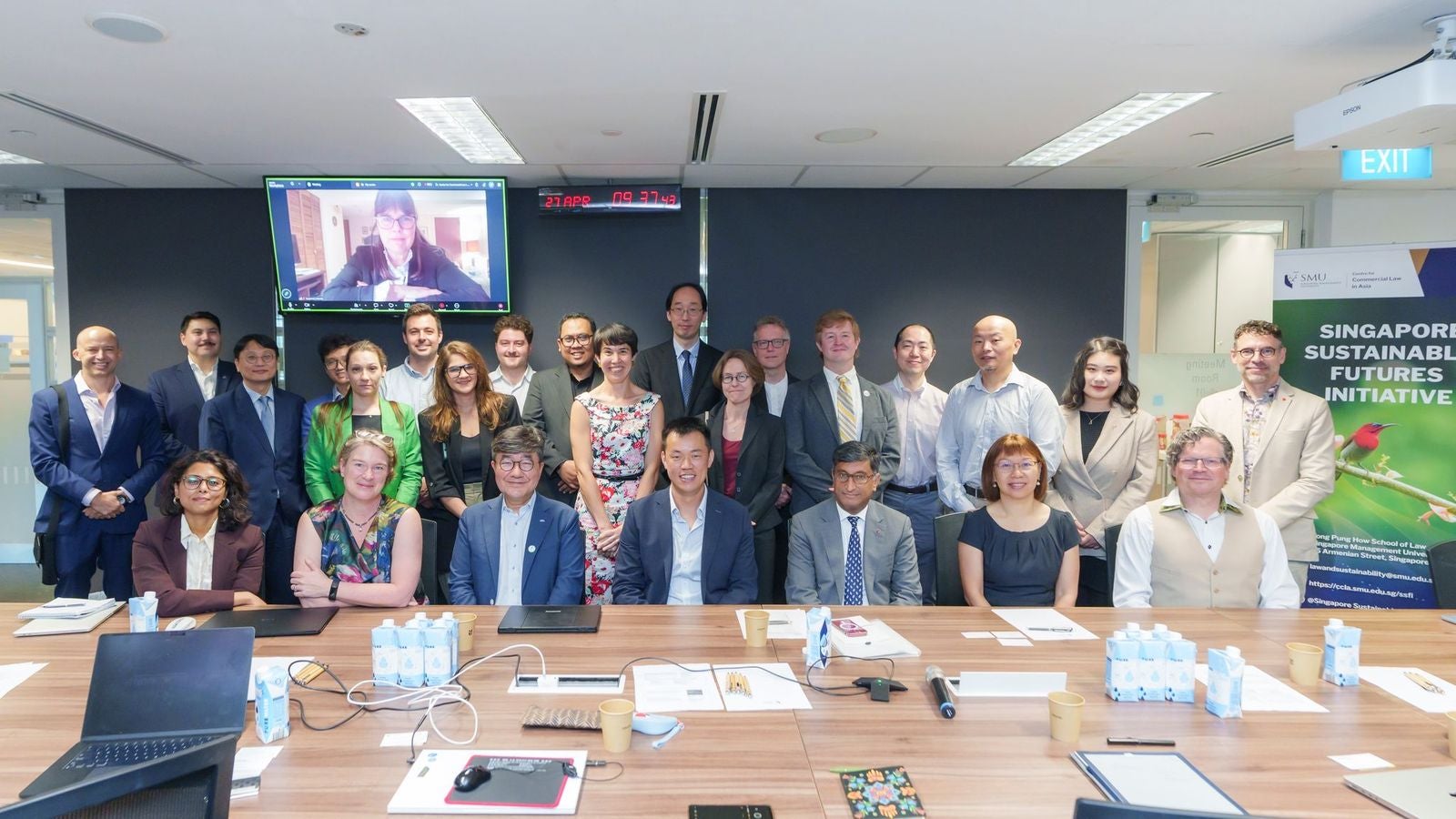


CIL Ocean Law and Policy Co-Head, Dr. Tara Davenport and Senior Research Fellow, Dr. Trung Nguyen participated as a panellist in the Canada – Asia Arctic Dialogue hosted by the Yong Pung How School of Law Singapore Management University from 27 – 28 April 2026 in Singapore. The event was attended by H.E. Paul Thoppil, Canada’s High Commissioner to the Republic of Singapore, academia and practitioners from Canada and the Asia Pacific region. The aim of the Dialogue was to seek ways for further cooperation of Arctic and non-Arctic states in the Arctic region.
Dr. Tara Davenport presented on Southeast Asian Approaches to the Security of Submarine Cables: Lessons for the Arctic? where she examines the growing threats to submarine cables in Southeast Asia from accidental fishing damage and vessel anchoring to deliberate state-sponsored sabotage and grey-zone hybrid warfare. It maps the region's legal and institutional landscape, identifying critical gaps in national legislation, UNCLOS enforcement powers, and ASEAN's cross-pillar coordination on physical cable protection. Drawing on Southeast Asian experiences with cooperation and existing information-sharing mechanisms like ReCAAP and Singapore's Information Fusion Centre, the presentation offers recommendations that may also hold lessons for securing critical underwater infrastructure in the Arctic.
The presentation by Dr. Trung Nguyen on Arctic Shipping, IMO and ASEAN countries examines the role of the International Maritime Organization (IMO) in governing the safety, security, and environmental protection of the rapidly growing volume of Arctic shipping. It surveys the key IMO legal instruments at play — including MARPOL discharge restrictions, SOLAS navigational measures, the Polar Code, and area-based tools such as Special Areas and Particularly Sensitive Sea Areas — illustrating their application through real-world examples in the Barents Sea and Bering Strait. The presentation asks what potential role can several ASEAN countries, such as Singapore, Vietnam, Indonesia, the Philippines play in the Arctic when shipping routes become more accessible.