
Click on this banner for the full statement and video.
CIL NUS Ocean Law and Policy Team at the CIL Workshop on the
International Regulation of Shipping and Law of the Sea: Essays In Honour of Robert Beckman, 14-15 April 2026, Singapore
Ambassador Rena Lee,
Chair of the CIL Governing Board,
for being awarded
an honorary doctorate
by the University of Aberdeen!
Meritorious Service Award
from the President of Vanuatu
together with other members of
The Hague Academy of
International Law Curatorium
spoke at the
ITLOS WORKSHOP
FOR LEGAL ADVISERS
which was held in Hamburg
from 7-12 September 2025
Visiting Scholar, awarded with the
Companion of the Order of St Michael
and St George (CMG), awarded for foreign
or diplomatic service.
Report, Recordings and Presentations now available, click here!
Congratulations Prof Koh!
27th Rhodes Academy
Breaking the Stronghold of Arbitration
presented at ITLOS on behalf of COSIS
National Day 2023 Commendation Award
CIL Distinguished Global Fellow, Professor Dire Tladi, for his nomination to the International Court of Justice by South Africa.
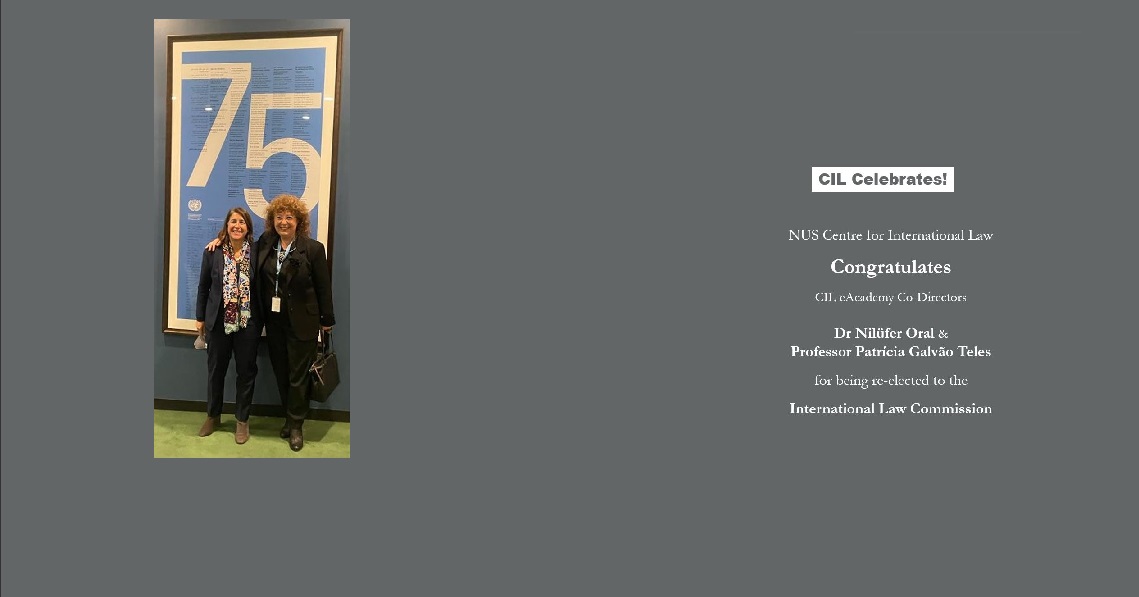
Nilufer Oral and Adjunct Senior Lecturer, Patricia Galvao-Teles as Chairpersons to the 74th session of the International Law Commission. This marks an important milestone for the Commission as in 74 years this is only the second time a woman will be Chairperson. Nilufer Oral will chair the first part of the 74th session and Patricia Galvao Teles will chair the second part.
CIL also celebrates the election of Martins Paparinskis, the editor-in-chief of CIL Dialogues, as Chair of the ILC Drafting Committee.
“The ship has come to shore!"

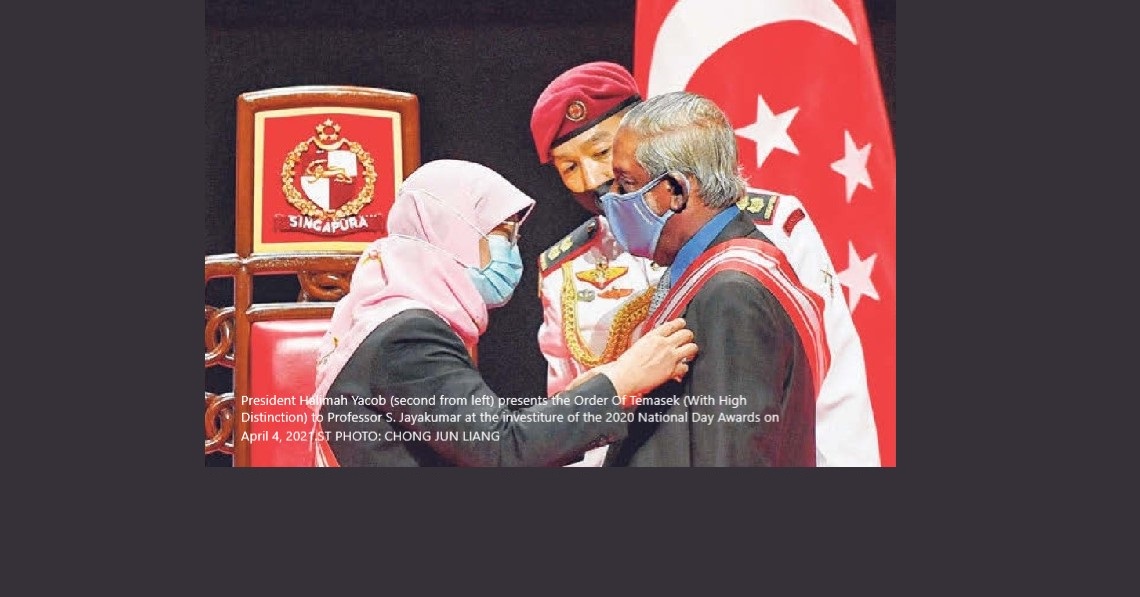
presented the Singapore President's
Efficiency Award Medal to CIL's Sadhna Rai.
Professor Davor Vidas
from Fridtjof Nansen Institute.
Wui Ling and Yvette in CIL!
CIL's Visiting Distinguished Global Scholar!





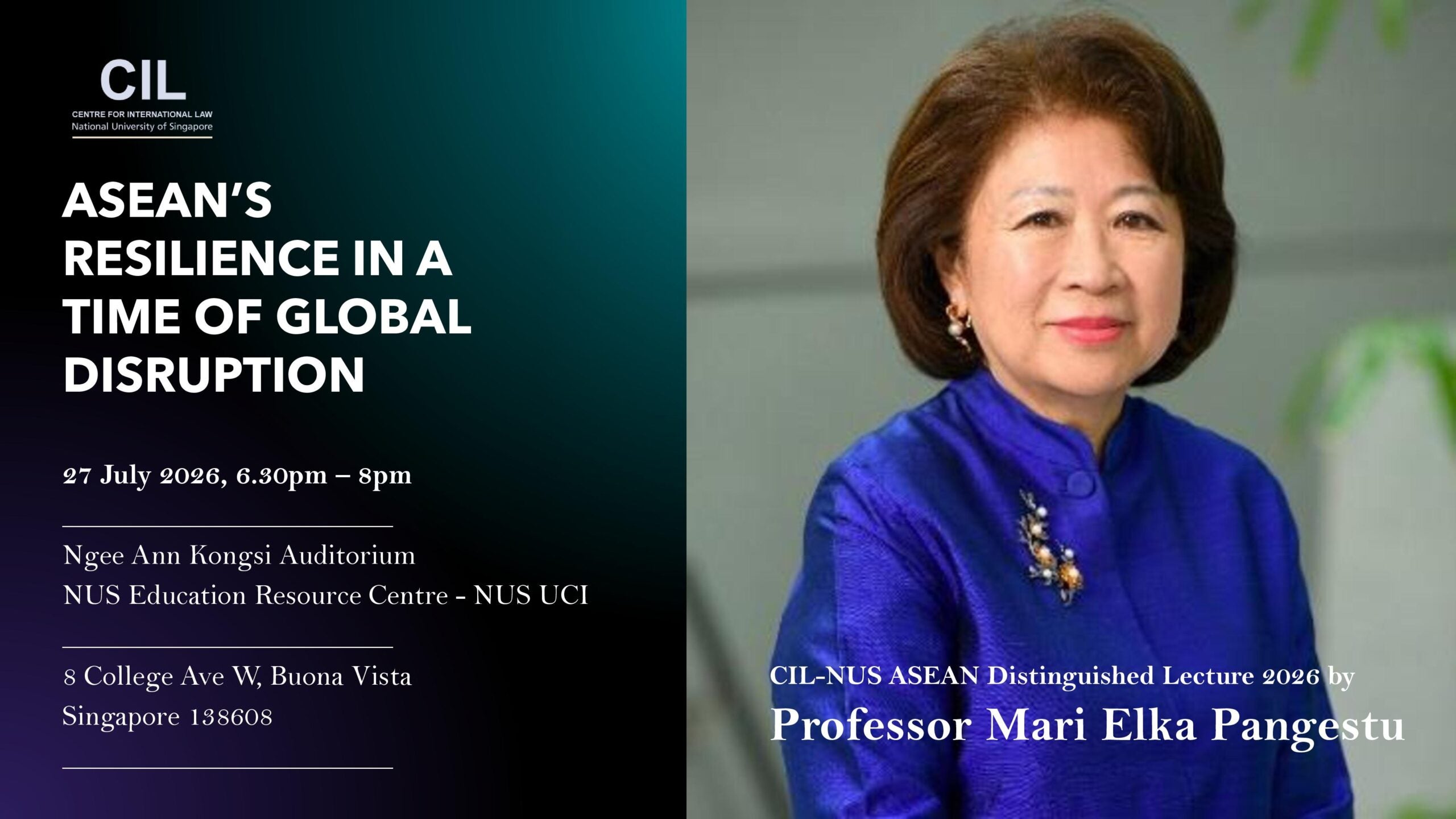
27 July 2026, Monday, 6.30pm - 8pm, NUS Education Resource Centre
Geopolitical rivalry, economic fragmentation, supply chain disruption, the rapid expansion of artificial intelligence (AI), and mounting climate-related risks are reshaping the environment in which ASEAN operates. In this changing context, ASEAN faces growing pressure to maintain its centrality, strengthen its resilience, and continue delivering practical benefits for its member states. ASEAN's future rests on its ability to preserve regional stability, deepen economic integration, and translate regional commitments into practical cooperation. As economics and security become increasingly intertwined, ASEAN will need to strengthen cooperation on trade, energy, and digital governance while ensuring that growth remains inclusive. Against this backdrop, Professor Mari Elka Pangestu's lecture will examine the strategic choices facing ASEAN and discuss how the region can continue to deliver tangible benefits for its people in an increasingly uncertain world.
Are China-Philippines tensions sinking the South China Sea Code of Conduct?