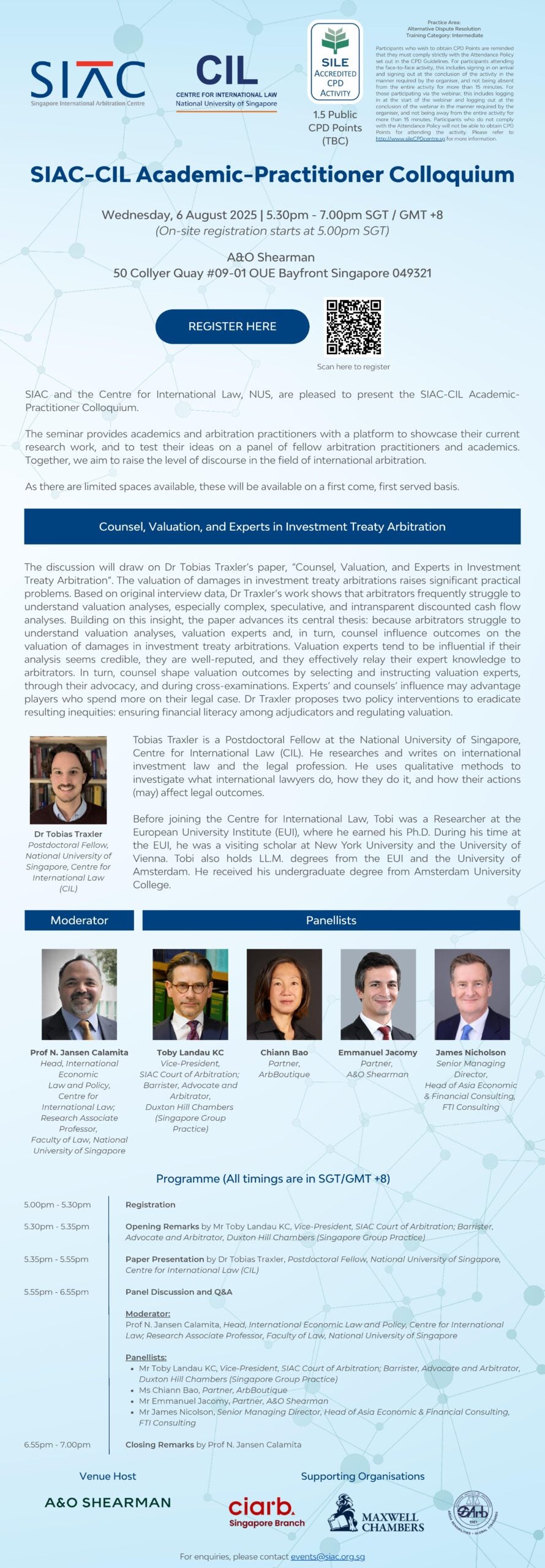
SIAC-CIL Academic-Practitioner Colloquium: Counsel, Valuation, and Experts in Investment Treaty Arbitration
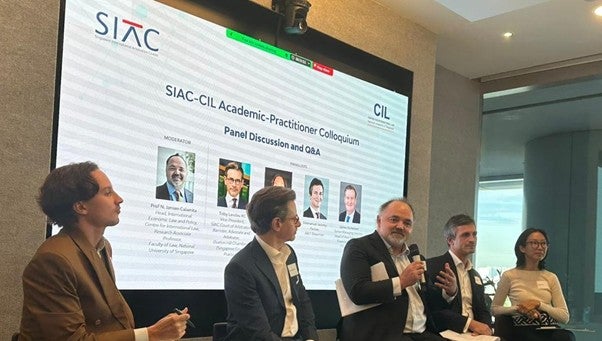
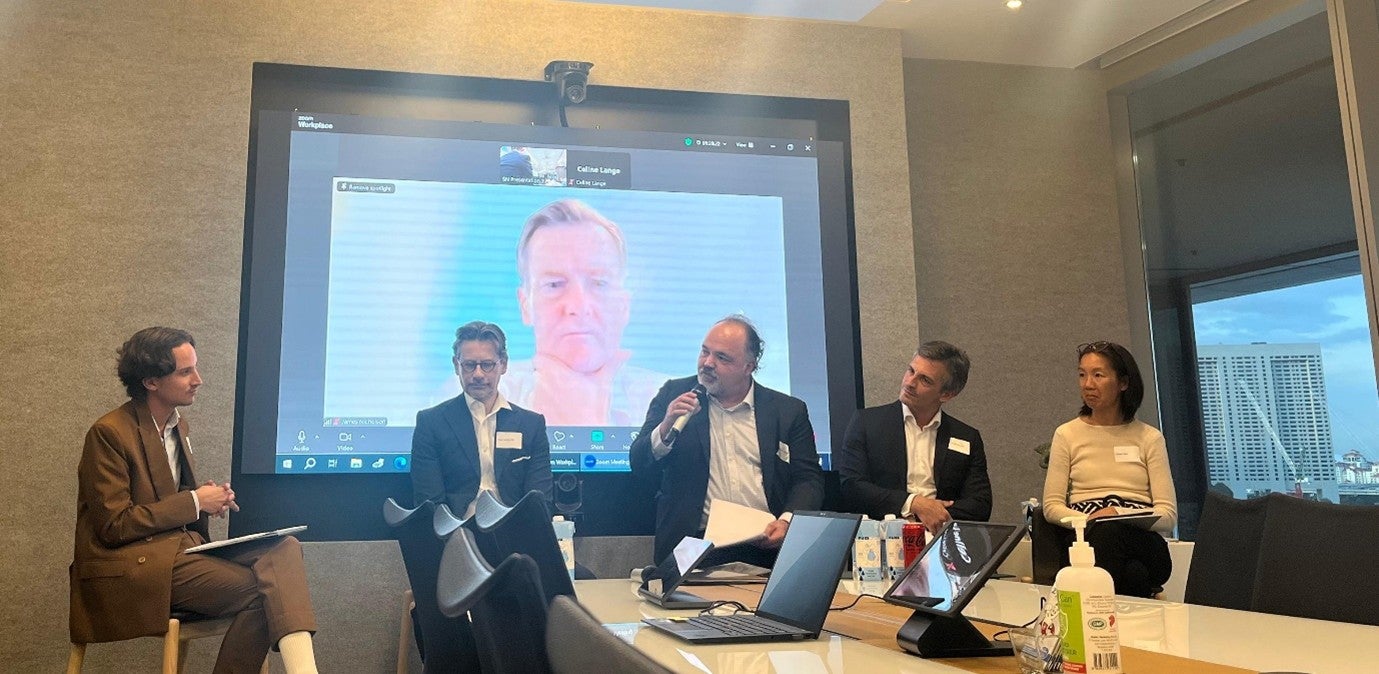
On 6 August 2025, the International Economic Law & Policy and the International Dispute Resolution teams at the NUS Centre for International Law (CIL) co-organised the latest edition of the SIAC-CIL Academic-Practitioner Colloquium with the Singapore International Arbitration Centre (SIAC) at A&O Shearman, Singapore.
The event brought together leading practitioners, academics and experts in international arbitration to discuss a topic at the heart of investor-state dispute settlement: the valuation of damages.
The evening featured a presentation by Dr Tobias Traxler, Postdoctoral Fellow at CIL, based on his forthcoming paper titled “Counsel, Valuation, and Experts in Investment Treaty Arbitration”. Drawing on original interviews with investment arbitration practitioners, Dr Traxler’s central thesis is that because arbitrators struggle to understand valuation analyses, valuation experts and, in turn, counsel influence outcomes on the valuation of damages in investment treaty arbitrations. Dr Traxler proposes two policy interventions to address resulting inequities: ensuring financial literacy among adjudicators and regulating valuation.
Following the presentation, a panel of eminent arbitration specialists offered reflections and critiques on the research, engaging in a wide-ranging and candid discussion moderated by Prof N. Jansen Calamita, Head of International Economic Law & Policy at CIL. Panellists included Mr Toby Landau KC, Vice-President of the SIAC Court of Arbitration; Ms Chiann Bao, Partner at ArbBoutique; Mr Emmanuel Jacomy, Partner at A&O Shearman; and Mr James Nicholson, Senior Managing Director at FTI Consulting.
A shared comment among the panel was the increasing centrality of expert evidence in valuation. While it was generally agreed that arbitrators should be able to meaningfully engage with such evidence, and that many struggle to do so, views diverged on how best to achieve that goal. Some emphasised improving procedural safeguards and structural tools, such as using tribunal-appointed experts, joint tutorials or case management measures, while others questioned whether the expectations placed on arbitrators’ financial literacy were realistic or even necessary.
The relationship between counsel, experts and tribunals was another focal point. Several speakers echoed the paper’s insight that experts and counsel can shape valuation outcomes well before they reach the tribunal, raising questions about legitimacy and transparency. While the paper’s critique of expert influence resonated with many, some panellists defended the current system, noting that expert evidence can be responsibly presented and tested within existing procedural frameworks and that arbitrators are gradually catching up with financial literacy.
Despite differences in emphasis, the discussion revealed a clear consensus: as valuation grows more central to investment arbitration, so too must the community’s commitment to ensuring fair, transparent and well-grounded decision-making—whether through arbitrator training, procedural innovation or meaningful structural reform.
The SIAC-CIL Colloquium is part of an ongoing collaboration between CIL and SIAC aimed at bridging academic research and arbitral practice. It offers a platform for cutting-edge scholarship to be tested, challenged and refined through dialogue with leading practitioners in the field.