
POST EVENT
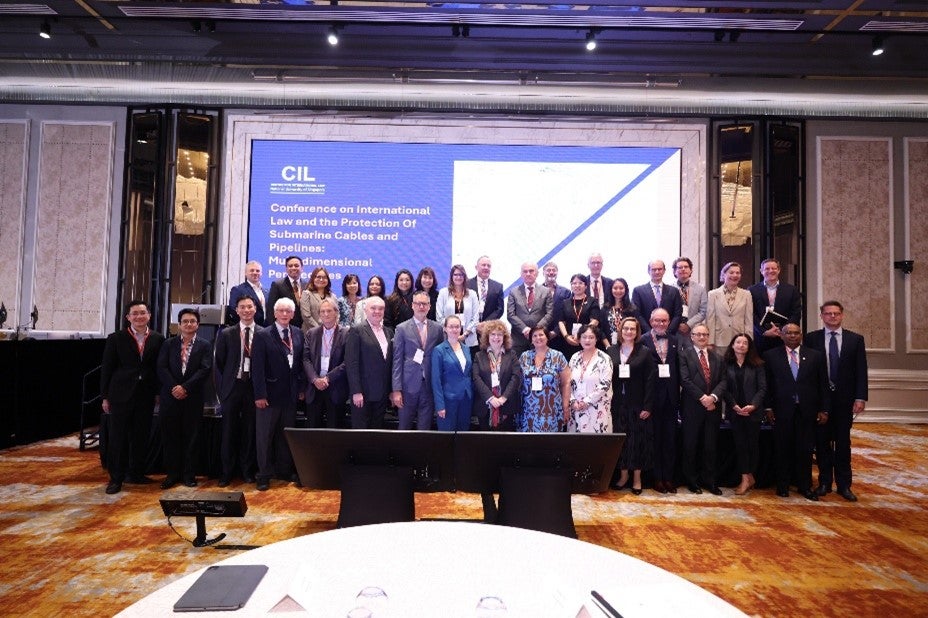
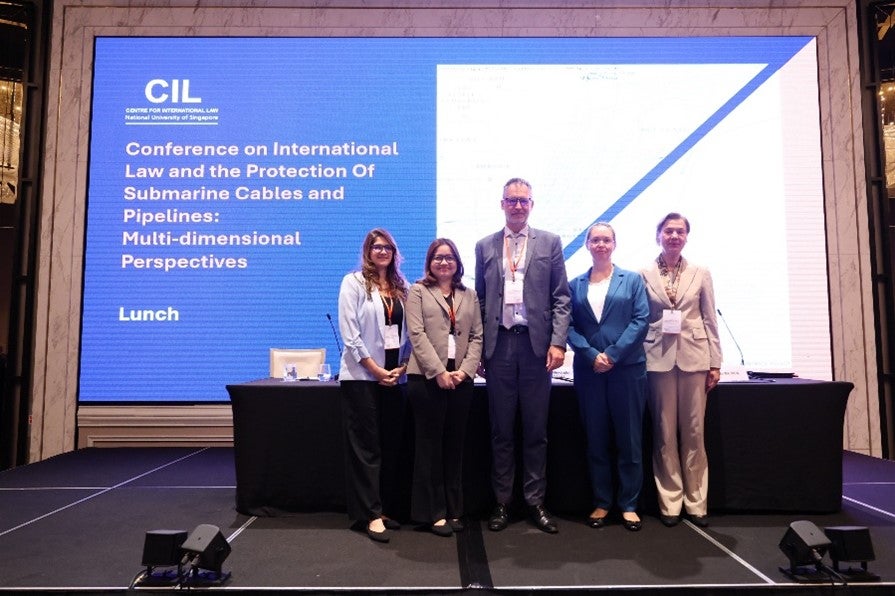
NUS Centre for International Law organised a closed-door Conference on International Law and the Protection of Submarine Cables and Pipelines: Multi-Dimensional Perspectives on 16 and 17 September 2025 at Orchard Hotel, Singapore.
The Conference brought together international lawyers, academics, government officials, policymakers, and industry experts to examine the international law that applies to the protection of submarine cables and pipelines from intentional acts of damage by states and non-state actors and discuss practical solutions to effectively protect submarine cables and pipelines.
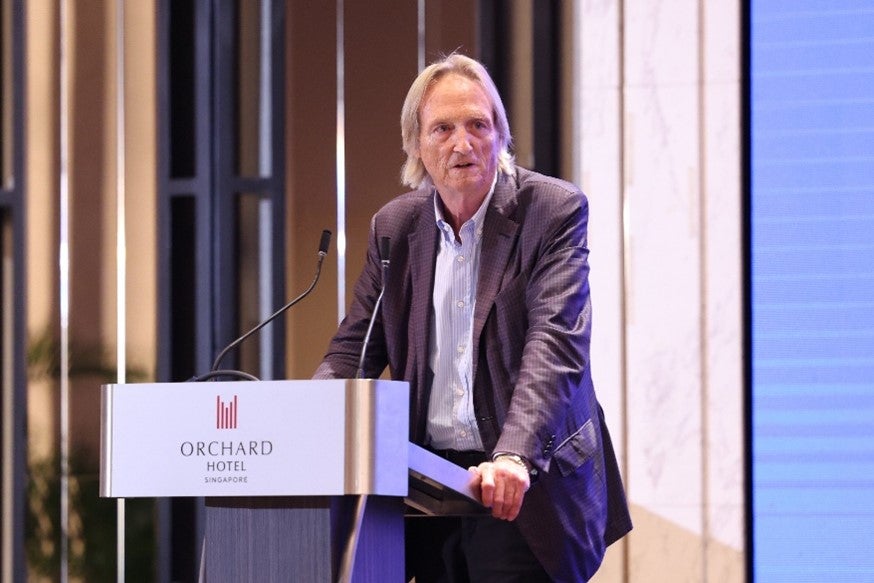
The Conference started off with a welcome address by Dr. Nilufer Oral, CIL Director and a keynote address by Mr. Lionel Yee, Deputy Attorney General, of the Attorney-General’s Chambers, Singapore which provided an overview of the different fields of international law that governed the protection of submarine cables and pipelines, emphasized the importance of using existing legal levers in international law to protect submarine cables and pipelines and underscored the need to adopt multi-dimensional approaches to protect submarine cables and pipelines that went beyond legal paradigms.
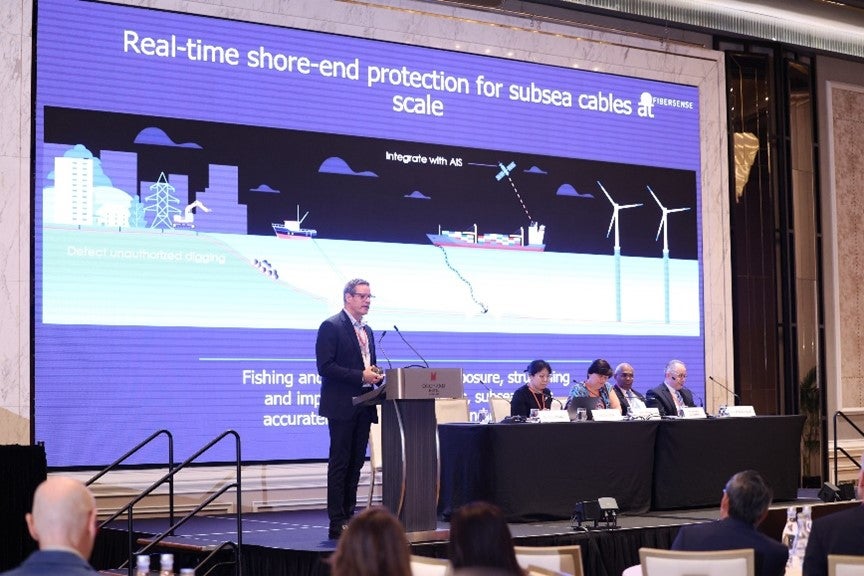
The subsequent panels at the Conference went on to examine a wide range of legal and policy issues, including monitoring and detection of threats to submarine cables and pipelines, national laws and regulations, and enforcement jurisdiction under the 1982 UN Convention on the Law of the Sea (UNCLOS); state responsibility and liability for damage to submarine cables and pipelines; the protection of submarine cables and pipelines as critical infrastructure and the protection of submarine cables and pipelines in armed conflict. The final session featured a roundtable discussion with eminent experts on future directions on the protection of submarine cables and pipelines and the challenges that the international community faces in ensuring the resilience of this critical undersea infrastructure.
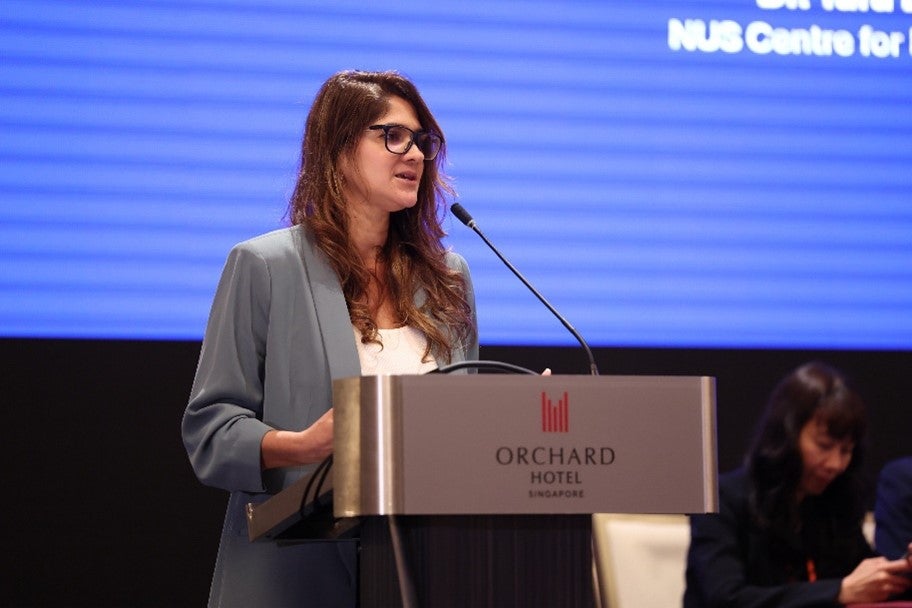
CIL researchers also actively took part in the various sessions of the Conference. Dr. Tara Davenport (Co-Head, Ocean Law and Policy) and Dr. Su Wai Mon (Research Fellow, Ocean Law and Policy) spoke in Session 2 on “National Laws and Regulations” of the Conference on the “Prescriptive Jurisdiction Over Intentional Damage to Submarine Cables and Pipelines” and “Protection of Submarine Cables and Pipelines: The Legal and Regulatory Practices of ASEAN Member States” respectively. Emeritus Prof. Robert Beckman (Co-Head, Ocean Law and Policy) was the Moderator in Session 3 on “Enforcement and Other Prevention Measures at Sea” and was a panellist in Session 7 on “International and Regional Cooperation on the Protection of Submarine Cables and Pipelines” where he presented on “International Organisations and the Protection of Submarine Cables and Pipelines.” Dr. Nilufer Oral (Director, CIL) moderated Session 4 on “State Responsibility and Liability”, and Dr. Samuel White (Senior Research Fellow, Peace and Security) and Ms. Dita Liliansa (Research Fellow, Ocean Law and Policy) presented in Session 5 on “Grey Zone Operations and Armed Conflicts” on the respective topics of “Prohibited Interventions and Submarine Cables” and “The Protection of Submarine Cables and Pipelines in Armed Conflict: An Asian Perspective”.
We would like to thank all speakers and moderators for the fruitful and thought-provoking presentations and discussions, as well as participants for posing insightful questions to the panellists which enabled a critical, diverse and interesting exchange of ideas and arguments.
Keynote Address:
Mr. Lionel Yee’s Keynote Address
PowerPoint Presentations:
Session 1
Session 2
Session 3
Session 4
Dr. Youri van Logchem – Flag State Responsibility for Damage to Submarine Cables and Pipelines
Session 5
Session 5 – Dr. Samuel White – The Silent Treatment: Coercion by Cable Cut
Session 5 – Prof. Rob McLaughlin – Could the undersea data cable system be ‘neutral’?
Session 6
Session 6 – Dr. Camino Kavanagh – Subsea Cables as Critical Infrastructure
Session 7
Session 8








Pre-Event Information
Background
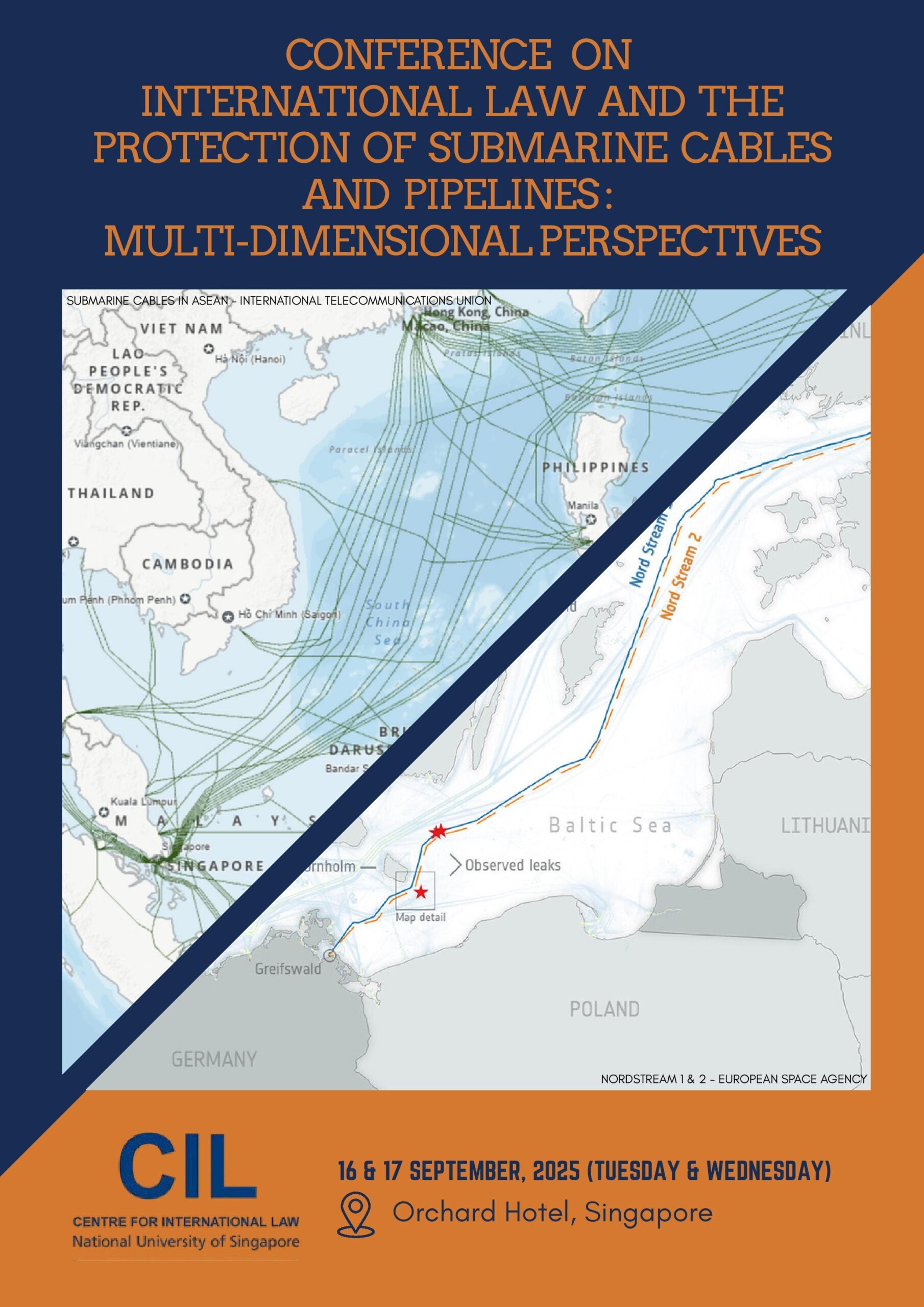
Submarine cables and pipelines traverse the ocean floor, connecting countries and continents and facilitating vital communication and energy services to states and their citizens. They have been described by the General Assembly as “vitally important to the global economy and national security of all States.”
Since the attacks against the Nord Stream pipelines in the Exclusive Economic Zones (EEZs) of Denmark and Sweden in 2022, the vulnerability of submarine cables and pipelines to intentional damage has been thrust into the spotlight. A spate of media reports on damage to submarine fibre optic and power cables in Europe and Asia between 2022 and 2025 have exacerbated concerns about the risks to submarine cables and pipelines against a background of increasing geopolitical complexities, grey zone tactics and armed conflicts. These concerns centre on the potential ramifications for vital government functions, including disruption to essential services to populations and economic. Damage to submarine cables and pipelines may also cause harm to the marine environment and associated ecosystem services.
International law is a critical component of policies and strategies on the protection of submarine cables. Several areas of international law set out the ambit of states’ rights and obligations on different aspects of the protection of submarine cables and pipelines and also provide frameworks for state cooperation. International law also shapes how states, international and regional bodies regulate industry actors, who play a vital role in the protection of submarine cables and pipelines. However, international law typically articulate states’ rights and obligations in general terms, and operationalizing such rights and obligations in practice faces challenges. Moreover, many of these international legal frameworks were adopted at a time when the reliance on submarine cables and pipelines was not foreseen and may not fully address the constantly evolving challenges that confront the protection of submarine cables and pipelines.
Objectives
It is against this background that the Centre for International Law (CIL) at the National University of Singapore (NUS) is organizing a 2-day conference on “International Law and the Protection of Submarine Cables and Pipelines: Multidimensional Perspectives” on 16 and 17 September 2025 at Orchard Hotel, Singapore. The Conference brings together international lawyers, government officials, policy makers and industry experts to examine the international law that applies to the protection of submarine cables and pipelines from intentional acts of damage by states and non-state actors, with a specific focus on the law of the sea, the law on the use of force, the law of armed conflict and legal frameworks on the protection of submarine cables and pipelines as critical infrastructure.
The Conference aims to deepen an understanding of existing international legal frameworks and to provide a forum for discussing practical solutions consistent with international law to effectively protect submarine cables and pipelines. The Conference will examine a range of issues including:
- Monitoring, detection and information sharing of threats to submarine cables and pipelines;
- National laws and regulations on the protection of submarine cables and pipelines;
- Enforcement and other prevention measures at sea to threatened or actual damage to submarine cables and pipelines
- State responsibility and liability for damage to submarine cables and pipelines
- Grey zone operations, armed conflict and the protection of submarine cables and pipelines
- Protection of submarine cables and pipelines as critical infrastructure
- The role of international and regional bodies on the protection of submarine cables and pipelines
Recommendations for the strengthening of international law on the protection of submarine cables and pipelines